
Commercial Lease Repair Obligations Explained

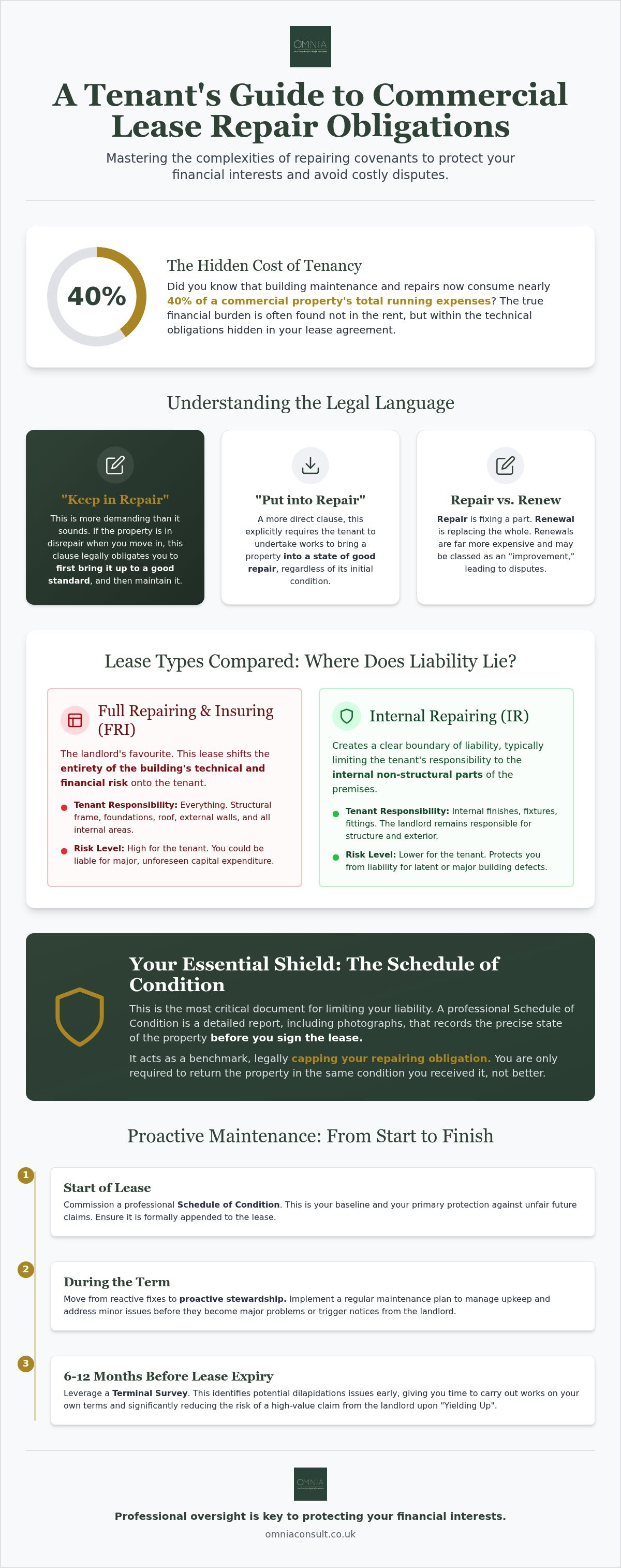
Did you know that building maintenance and repairs now consume nearly 40% of a commercial property's total running expenses? For many tenants and landlords, the true cost of a tenancy isn't found in the monthly rent, but in the technical obligations hidden within the lease. It's common to feel a sense of anxiety regarding structural versus internal responsibilities, or to worry about the prospect of an unexpectedly high dilapidations claim once the term ends. Having commercial lease repair obligations explained clearly is the first step towards regaining control over your property assets.
We understand that the distinction between "repairing" and "renewing" often feels like a legal minefield. This article promises to help you master these complexities, ensuring you have the knowledge to protect your financial interests from day one. We'll explore the critical differences between Full Repairing and Insuring (FRI) and Internal Repairing (IR) leases, whilst demonstrating how a professional Schedule of Condition acts as a vital shield against unfair claims. You'll also gain a practical framework for managing building maintenance throughout your term, moving from reactive fixes to a strategy of proactive stewardship.
Table of Contents
What are Commercial Lease Repair Obligations?
Repairing covenants represent the legal and technical promises a tenant makes regarding the upkeep of a property. These clauses determine the financial responsibility for maintenance throughout the tenancy. Having your commercial lease repair obligations explained by a technical professional is essential because these requirements are often more demanding than they appear on paper. They aren't merely suggestions for tidiness; they're binding commitments that dictate the building's lifecycle management and your eventual financial liability.
One of the most critical distinctions involves the phrases "keep in repair" and "put into repair." If a lease requires a tenant to keep a building in repair, and the property is already in a state of disrepair at the start of the term, the tenant is often legally obligated to bring it up to a good standard first. This can lead to significant, unforeseen costs. Understanding how these factors influence your long-term expenses is why having commercial lease repair obligations explained is so important during lease negotiations. The "standard of repair" expected is not a universal metric. Instead, it's assessed based on the age, character, and locality of the building. A refurbished office in a city centre carries a much higher threshold for maintenance than a secondary industrial unit in an outlying area.
Most commercial agreements in the UK are structured similarly to a Net Lease, where the tenant bears the weight of maintenance and insurance costs. These obligations directly feed into the eventual dilapidations process. If repairs aren't managed effectively during the term, the landlord will likely issue a claim at the end of the lease to recover the costs of restoring the property to its required state. Professional oversight ensures that any work carried out meets the necessary technical specifications to satisfy these legal demands.
The Legal Language of Repair: Repair vs. Renew
The term "repair" generally refers to fixing a specific part of the property rather than replacing the entire structure. It doesn't usually require the tenant to provide a building that's better than the one they originally leased. However, when an element is so damaged that it can't be fixed, a "renewal" might be necessary. This distinction is vital for your financial planning, as renewals are significantly more expensive and can lead to disputes over whether the work constitutes an "improvement." Repair is the restoration of a part to its previous condition without replacing the whole.
Common Repairing Covenants Found in UK Leases
Good and substantial repair: This is a high standard that requires the property to be kept in a condition that would make it attractive to a new tenant. It covers both the aesthetic and functional aspects of the building fabric.
Fair wear and tear: Whilst common in residential leases, this clause is rarely included in modern commercial agreements. Most landlords expect the property to be returned in a specific condition regardless of its age or the natural degradation of materials.
Specific fabric clauses: These details focus on the building's envelope, including the roof, windows, and structural integrity. They often require rigorous technical specifications to ensure compliance with the lease terms and to avoid disputes during terminal surveys.
FRI vs. IR Leases: Understanding Your Level of Liability
The specific structure of your agreement is the most significant factor when having commercial lease repair obligations explained. In the UK market, most commercial tenancies fall into one of two categories: Full Repairing and Insuring (FRI) or Internal Repairing (IR). The choice between them isn't just a legal preference; it's a technical decision that determines who pays when the roof leaks or the foundations shift. Understanding these boundaries ensures you aren't blindsided by costs that should technically sit with another party.
Full Repairing and Insuring (FRI) Leases
Landlords typically favour FRI leases because they shift the entirety of the building's technical and financial risk onto the occupier. This preserves the investment value of the asset, as the landlord receives a "clear" rent without deductions for ongoing maintenance. For tenants, however, this means taking on responsibility for the building's entire envelope, including external elevations and structural components. Without thorough technical due diligence, you could find yourself liable for historic defects in the roof or damp issues that existed long before you arrived. Using commercial building condition surveys before signing is the only way to uncover these hidden liabilities and negotiate appropriate protections.
Internal Repairing (IR) and "Part-FRI" Structures
In multi-let buildings, such as office blocks or shopping centres, an IR lease is more common. Here, the tenant's responsibility is limited to the interior "skin" of their specific unit, usually from the floor screed to the ceiling plaster. Structural repairs are handled by the landlord, but the costs are typically recovered through a service charge. Whilst this feels safer, tenants should seek service charge caps to prevent unexpected bills for major works. Even with an IR lease, a landlord should commission regular structural surveys to ensure the building's long-term viability isn't compromised by neglect in common areas. This proactive approach protects both the asset value and the tenant's operational continuity.
Identifying the exact boundaries of your liability requires more than a legal review; it demands a technical assessment of the building's current state. By understanding these lease structures, you can better negotiate terms that align with your business's risk appetite and long-term financial strategy. This clarity is the foundation of a stable landlord-tenant relationship, ensuring that property maintenance remains a managed process rather than a source of constant friction.
The Role of a Schedule of Condition in Limiting Liability
A Schedule of Condition is the most powerful technical shield available to a tenant during lease negotiations. Whilst previous sections have covered how commercial lease repair obligations explained the legal framework of liability, this document provides the physical evidence required to cap those obligations. Without it, a tenant might be forced to return a property in a better condition than they found it, effectively subsidising the landlord's capital improvements. With building maintenance price inflation reaching 5.4% in early 2026, the financial risk of uncapped repairing covenants has never been higher.
The document works by recording the exact state of the premises at the commencement of the term. For this to be legally enforceable, the lease wording must explicitly reference the schedule, stating that the tenant is not required to return the property in any better state of repair than is evidenced by the report. This technical baseline is a cornerstone of professional asset management planning buildings, as it allows occupiers to budget for genuine wear and tear rather than inherited defects. It transforms a vague legal promise into a measurable technical standard.
What Makes a Schedule of Condition Effective?
An effective schedule requires more than a handful of smartphone photos. It demands high-resolution imagery paired with precise technical descriptions of existing defects, such as hairline cracks, water staining, or mechanical failures. Using a vague "as seen" description is insufficient for complex building fabric; it fails to capture the nuances that a surveyor identifies during a detailed descriptive survey. Both parties must agree upon and sign the final document to ensure it carries weight during end-of-lease dilapidations negotiations. This clarity prevents disputes before they begin, fostering a transparent relationship between landlord and tenant.
Negotiating Repair Exclusions
A robust survey identifies pre-existing structural issues that should be excluded from the tenant's responsibility entirely. This is particularly vital when dealing with "latent defects" in newer buildings, where design or construction flaws may only become apparent years into the tenancy. By identifying these risks early, you can negotiate clauses that protect your budget from structural failures you didn't cause. A Schedule of Condition prevents a landlord from claiming for pre-existing damage. This simple protection ensures your commercial lease repair obligations explained in the contract remain fair, proportionate, and rooted in the physical reality of the building.
Managing Repairs During the Lease Term
Once the baseline is set, the focus shifts to the active management of the building fabric. Having your commercial lease repair obligations explained is only useful if that knowledge translates into a robust maintenance strategy throughout the tenancy. Many tenants fall into the trap of deferred maintenance, only to face a staggering "terminal" dilapidations claim at the end of the term. By addressing repairs as they arise, you maintain the property's functional integrity and avoid the volatile cost increases seen in the BCIS database, which rose by 5.4% in the year leading to early 2026.
A significant risk during the term is the "Jervis v Rickman" notice. This legal mechanism allows a landlord to identify a breach of repairing covenants and serve notice for the tenant to rectify the issue within a specific timeframe. If the tenant fails to act, the landlord has the right to enter the premises, carry out the works, and recover the costs as a debt. This process is often far more expensive than if the tenant had organised the repairs themselves. Technical oversight is essential here to ensure any works meet the lease standards without over-specifying the requirements or performing unnecessary upgrades.
Developing a Maintenance Strategy
Moving from a reactive "break-fix" mindset to proactive asset management is the hallmark of a sophisticated occupier. This involves budgeting for the lifecycle replacement of Mechanical and Electrical (M&E) services, such as HVAC systems or lifts, before they reach the point of failure. Engaging commercial project management companies provides the technical stewardship needed to oversee these complex repairs, ensuring they are executed efficiently and within budget. A structured approach prevents minor issues from escalating into structural failures that could trigger your commercial lease repair obligations explained in the contract.
Regulatory Compliance and Technical Specifications
Even seemingly minor repairs can trigger complex regulatory requirements. For example, works on a heritage asset may require listed building consent, whilst larger external repairs might necessitate planning applications. For any major works, ensuring compliance with health and safety legislation through CDM Principal Designer services is a legal necessity. Professional contract administration protects your capital by ensuring contractors adhere to technical specifications and that the quality of work stands up to the scrutiny of a landlord’s surveyor. This level of oversight ensures that repairs are not just completed, but are technically compliant with the high standards of a modern commercial lease.
If you are currently managing a complex repair project or have received a notice of disrepair, contact OMNIA Building Consultants for expert technical guidance and contract administration.
Avoiding Dilapidations Disputes through Professional Oversight
As we have seen with commercial lease repair obligations explained throughout this guide, the final hurdle for any tenant or landlord is the "Yield Up" clause. This provision dictates the standard to which a property must be returned at the end of the term. Failing to meet this standard often results in a Schedule of Dilapidations, a document that can lead to significant financial friction if not managed with technical precision. To mitigate these risks, commissioning a terminal survey six to twelve months before lease expiry is essential. This proactive step allows you to identify necessary works and rectify them on your own terms, rather than facing the landlord’s inflated costs later.
One of the most misunderstood aspects of this process is the "Section 18" valuation. Under the Landlord and Tenant Act 1927, the damages a landlord can claim are capped by the "diminution in value" of the property. This means that if the cost of the repairs exceeds the actual loss in the building's market value, the lower figure often prevails. Determining this requires a sophisticated blend of technical surveying and valuation expertise. Professional architectural design for commercial property is frequently required during this phase to ensure that any reinstatement works are compliant with modern building regulations whilst satisfying the original lease requirements.
The Dilapidations Process: A Technical Perspective
When a landlord serves a Schedule of Dilapidations, it must be met with a surveyor-led "quantified demand" response. This isn't merely a legal rebuttal; it's a technical audit of the landlord's claims. We interpret each item to ensure it aligns with the building’s actual state of repair and the specific covenants of the lease. Negotiating settlements based on physical evidence and technical specifications ensures that you only pay for genuine breaches, protecting your business from over-inflated claims for "betterment" that go beyond your legal duties.
Reinstatement of Alterations
Most leases require tenants to remove any improvements made during the term, such as partitions or bespoke lighting, and "put back" the original layout. Reinstatement obligations often include the removal of data cabling and partitions. This process becomes significantly more complex when dealing with heritage assets, requiring specialist project management for listed building renovation to ensure that the removal of modern additions does not damage the historic fabric. By integrating technical design with rigorous project oversight, you can ensure the property is yielded up in a condition that satisfies the landlord and fulfills your commercial lease repair obligations explained in the contract, bringing the tenancy to a controlled and professional conclusion.
Securing Your Property Assets for the Long Term
Having commercial lease repair obligations explained provides the clarity needed to transform property maintenance from an unpredictable liability into a managed technical strategy. Success in the commercial sector requires moving beyond reactive fixes and embracing proactive stewardship. By utilising a professional Schedule of Condition and conducting terminal surveys well in advance of lease expiry, you can protect your capital from inflated claims and ensure your "Yield Up" obligations are met with technical precision.
OMNIA Building Consultants provides expert technical stewardship for commercial assets, offering comprehensive project management and contract administration to safeguard your interests. As specialists in regulatory compliance and listed building consent, we act as a steady hand throughout the complexities of the property lifecycle. Contact OMNIA Building Consultants for a professional building condition survey to secure your commercial property interests today. Managing a complex asset doesn't have to be a source of anxiety when you have a chartered partner by your side.
Frequently Asked Questions
Is the landlord always responsible for structural repairs in a commercial lease?
No, the responsibility depends entirely on the lease structure. In a Full Repairing and Insuring (FRI) lease, the tenant is typically responsible for the entire building fabric, including the structure and foundations. Internal Repairing (IR) leases usually limit the tenant's liability to the interior, leaving the landlord responsible for external and structural elements. However, these costs are often recovered from tenants via a service charge, making technical due diligence vital before signing any agreement.
What happens if I ignore my repair obligations during the lease term?
Ignoring maintenance can lead to several severe consequences. The landlord may serve an interim schedule of dilapidations or a "Jervis v Rickman" notice, requiring you to carry out works within a specific timeframe. If you fail to comply, the landlord can often enter the property to perform repairs and charge you for the cost. Additionally, neglecting repairs usually leads to a significantly higher terminal dilapidations claim once the lease expires, impacting your business's cash flow.
Can a landlord force me to replace a roof that was already old when I moved in?
Yes, if your lease contains a "keep in repair" covenant and there is no Schedule of Condition to limit your liability. In such cases, the law often requires the tenant to bring the property up to a "good and substantial" standard, even if it was in disrepair at the start. This is why having commercial lease repair obligations explained by a surveyor is critical. A robust photographic record can prevent you from being forced into providing the landlord with a brand-new asset.
What is the difference between a repair and an improvement?
A repair involves restoring a specific part of the building to its previous functional state without changing its character. An improvement goes further by providing something better or more valuable than what was originally there. Whilst you are generally only obligated to repair, the line becomes blurred when modern materials must be used or when a component is replaced in its entirety. Professional building consultancy helps distinguish these costs, ensuring you don't pay for enhancements that legally constitute landlord "betterment."
How much does a Schedule of Condition cost for a commercial property?
The cost of a Schedule of Condition varies significantly based on the size, age, and technical complexity of the building. Factors such as the number of storeys, the condition of the mechanical and electrical systems, and the level of detail required for the descriptive survey all influence the final fee. Rather than looking for a flat rate, you should focus on the quality of the technical stewardship provided, as a thorough report can save thousands in future dilapidations disputes.
Does a "fair wear and tear" clause actually protect me in a commercial setting?
Fair wear and tear clauses are exceptionally rare in modern commercial leases and offer limited protection compared to residential agreements. Most commercial landlords expect the property to be returned in a specific condition regardless of natural degradation. If your lease doesn't explicitly include this exception, you remain liable for any deterioration caused by the passage of time. It's much safer to rely on a professionally prepared Schedule of Condition to cap your liability to the building's initial state.
What is a "Jervis v Rickman" clause and why should I be concerned?
This clause grants a landlord the right to enter your premises during the lease term to inspect the state of repair. If they identify breaches in your commercial lease repair obligations explained in the contract, they can serve a notice requiring you to fix them. If you don't act, the landlord performs the work and recovers the expense as a debt. This process removes your control over contractor selection and costs, making it a potentially very expensive enforcement mechanism.
Do I need planning permission to carry out repairs on a listed commercial building?
Whilst minor like-for-like repairs might not require full planning permission, they often necessitate Listed Building Consent if they affect the character of the property. Using incorrect materials or methods can lead to criminal prosecution and costly enforcement notices. It's essential to seek professional guidance on regulatory compliance before starting any works. A specialist consultant can manage the application process and ensure all technical specifications meet the rigorous standards required for heritage assets.


