
Challenging Dilapidations: A Technical Guide for Tenants
- OMNIA Building Consultants

- 11 minutes ago
- 11 min read
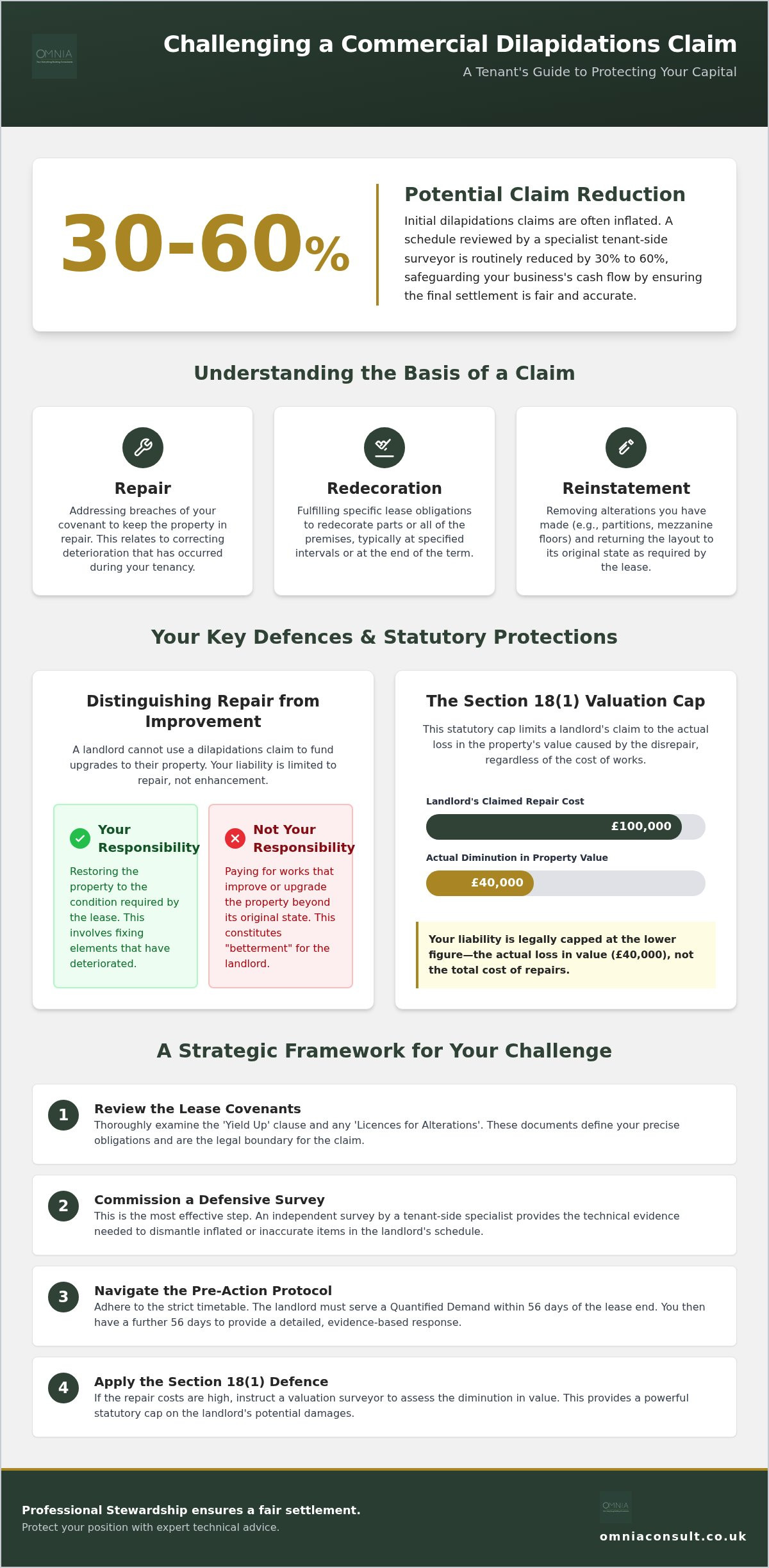
Did you know that a schedule of dilapidations reviewed by a specialist tenant-side surveyor is routinely reduced by 30% to 60%? This data highlights why learning how to challenge a dilapidations claim is essential for any outgoing tenant, as initial demands are often inflated opening gambits rather than reflections of actual loss. It's natural to feel a sense of trepidation when faced with significant financial liability, especially whilst trying to distinguish between a simple repair and a landlord’s attempt at a property upgrade.
We understand that you need a steady hand to guide you through these technical complexities. This guide explains how to use forensic evidence and statutory protections to dismantle excessive demands and protect your cash flow. We will show you how to leverage Section 18(1) of the Landlord and Tenant Act 1927 and the Pre-Action Protocol to ensure your final settlement is fair. You'll gain a clear, structured framework for building an evidence-based rebuttal that protects your business's capital and provides long-term peace of mind.
Table of Contents
Understanding the Basis of a Commercial Dilapidations Claim
In commercial property, Dilapidations refer to breaches of a tenant's lease obligations regarding the physical state of the premises. When a landlord serves a schedule, they're essentially demanding that you remedy these breaches or pay a financial settlement to cover the costs. These claims typically focus on three distinct categories: repair, redecoration, and the reinstatement of any alterations made during your occupancy. Understanding these fundamentals is the first step in learning how to challenge a dilapidations claim effectively.
Landlords may serve an Interim Schedule during the lease term to ensure the asset's value is maintained, but most disputes arise from a Terminal Schedule served as the lease expires. Whilst it's common for landlords to include every conceivable item in this initial document to create negotiation headroom, many of these points won't stand up to technical scrutiny. By starting with an inflated figure, they hope to settle at a higher amount than is strictly necessary under the law.
The Lease Covenants: Your Legal Boundary
The Yield Up clause is the most critical part of your lease when it comes to exit strategy. It dictates the exact condition in which the property must be returned. There's a significant legal difference between a covenant to keep in repair and one to put in repair. The latter can force a tenant to improve a property beyond the state it was in at the start of the lease. You must also review any Licences for Alterations; these documents often override general lease terms and specify whether partitions or mezzanine floors must be removed or can remain in situ.
Why Challenging a Claim is Essential for Cash Flow
Unplanned dilapidations costs can severely disrupt a business's exit or relocation plans. Because landlords often use these claims as leverage, accepting the first figure offered is rarely a sound financial decision. Research indicates that a schedule of dilapidations reviewed by a specialist tenant-side surveyor is routinely reduced by 30% to 60%. Successfully identifying how to challenge a dilapidations claim through technical scrutiny ensures that your capital stays within the business. Professional stewardship doesn't just lower the final bill; it provides the clarity needed to distinguish between genuine repairs and opportunistic property improvements.
Navigating the Dilapidations Protocol and Section 18(1) Limits
The process of addressing lease-end repairs is governed by the Pre-action Protocol for Claims for Damages in Relation to the Physical State of Commercial Property. This framework, often referred to as the Dilapidations Protocol, ensures that both landlords and tenants act reasonably and transparently. It establishes a clear timetable; landlords are expected to serve a Schedule of Dilapidations and a Quantified Demand within 56 days of the lease ending. Understanding these procedural boundaries is a fundamental component of how to challenge a dilapidations claim, as it prevents landlords from introducing surprise costs or unreasonable demands outside the established window.
The Pre-action Protocol for Commercial Property
Once you receive a Quantified Demand, the Protocol allows you a further 56 days to provide a formal, detailed response. During this period, you must scrutinise every item to ensure the landlord is only seeking recovery for actual losses. Effective asset management planning buildings often involves preparing for these timelines well in advance, ensuring that all maintenance records and condition reports are organised and ready for review. This proactive approach allows for a composed, evidence-based rebuttal rather than a rushed reaction under pressure.
Diminution in Value: The Ultimate Defensive Tool
One of the most powerful protections for a tenant is found in Section 18(1) of the Landlord and Tenant Act 1927. This legislation creates a statutory cap on the damages a landlord can recover for a breach of a repair covenant. Essentially, the landlord’s claim is limited to the "diminution in value" of their interest in the property. If the cost of the repairs listed in the schedule is £100,000, but the lack of those repairs only reduces the property's market value by £40,000, the landlord's claim is legally capped at the lower figure.
This principle becomes particularly relevant in cases of "supersession." If a landlord intends to demolish the building, strip it back to the shell for a major refurbishment, or change its use, the repairs requested in the schedule may be entirely rendered valueless. In such scenarios, the technical cost of repair might be significant, but the actual loss to the landlord is zero. Diminution in value is defined as the limit of a landlord’s recoverable loss regardless of the actual cost of the remedial works. Engaging a specialist to conduct Building Condition Surveys can help identify these valuation gaps early in the negotiation process.
Identifying Technical Inaccuracies in the Schedule of Dilapidations
A landlord’s schedule of dilapidations is rarely a neutral assessment; it's a document typically drafted to maximise recovery. To protect your business's capital, you must scrutinise the technical basis of every item listed. Understanding the nuances of property law and surveying standards is vital when determining how to challenge a dilapidations claim. Both parties are required to follow the official Dilapidations Protocol, which necessitates a level of detail and evidence that many initial claims simply lack.
Repair vs. Improvement: Where Claims Often Fail
A common area of overreach involves landlords demanding improvements disguised as repairs. As a tenant, your obligation is generally to maintain the building in the condition dictated by the lease, not to provide the landlord with a brand-new asset. The "Standard of Repair" is a flexible concept that depends on the age, character, and locality of the premises at the start of the term. For instance, an older industrial unit doesn't need to be returned with the finish of a modern Grade A office. Utilising commercial building condition surveys at the outset or end of a lease provides the technical baseline needed to reject these opportunistic upgrade requests.
The Principle of Supersession
Supersession occurs when a landlord’s own plans for the property render your potential repairs redundant. If a landlord intends to refurbish the building or change its use, they can't claim for works that will be destroyed or replaced during that process. A classic example is a claim for repairing an obsolete HVAC system when the landlord’s marketing materials or planning applications show an intent to install a completely new climate control network. We often uncover these intentions by investigating local planning portals or commercial property listings, which can immediately strike significant sums off a claim.
Yield-Up Clauses and Reinstatement
The "Yield-Up" clause dictates the state of the property at lease expiry, particularly regarding alterations. Whilst a landlord might demand you remove partitions or mezzanine floors, this reinstatement isn't always automatic. You must review your original "Licence for Alterations" to see if the landlord formally requested reinstatement within the required notice period. The complexity of these works also intersects with modern architectural design for commercial property standards. If the landlord intends to keep your alterations because they add value for the next tenant, they can't legally charge you for their removal.
A Step-by-Step Guide to Formulating Your Challenge
Mounting a successful defence against an inflated claim requires a methodical transition from legal theory to technical data. This structured approach is the essence of how to challenge a dilapidations claim with precision. Before engaging in any formal dialogue with the landlord, you must consolidate your evidence. This involves gathering every relevant historical document, including the original lease, any Licences for Alterations, and comprehensive maintenance records. These files form the backbone of your rebuttal and provide the technical context your surveyor needs to protect your position.
Building Your Evidence Base
A Schedule of Condition appended to your lease at the commencement of the term is your most potent defensive tool. It serves as an undeniable baseline, ensuring you aren't held liable for defects that existed before your occupancy. You should supplement this with high-resolution photographic evidence and maintenance logs that demonstrate active stewardship of the asset. It's also prudent to obtain independent, market-tested quotes for any works you acknowledge are required. These independent figures often highlight significant discrepancies in the landlord's initial demand, providing a realistic basis for negotiation.
The Scott Schedule: The Document of Rebuttal
The technical heart of your challenge is the Scott Schedule. This document is a multi-column spreadsheet that allows for a granular, line-by-line response to the landlord's schedule of dilapidations. It typically includes columns for the landlord's description of the breach, their estimated cost, the tenant’s technical rebuttal, and your counter-valuation. Accuracy in the "Tenant Costing" column is vital for maintaining credibility during negotiations.
Professional commercial project management companies play a critical role here by assessing realistic work durations and current market rates for materials and labour. By populating this schedule with forensic detail, you shift the narrative away from the landlord's opening gambit and towards a settlement based on actual, quantifiable loss. This structured format is designed to facilitate "without prejudice" meetings, where both parties can discuss a commercial settlement in a controlled environment. If you require professional assistance to lead this technical rebuttal, appoint OMNIA Building Consultants to navigate the process on your behalf.
Professional Stewardship: How a Building Consultant Protects Your Position
OMNIA Building Consultants serves as your technical partner, providing the professional stewardship required to manage complex lease exits. Whilst the legal framework provides the rules, our role is to act as the "Trusted Navigator" through the technical data. We focus on delivering a robust, evidence-based rebuttal that often prevents disputes from escalating into costly litigation. Understanding how to challenge a dilapidations claim is not just about legal arguments; it's about having a strategist who can translate building condition data into a compelling commercial case that protects your business's capital.
Technical Specifications vs. Landlord Demands
One of the most effective ways to counter vague or unreasonable landlord demands is through the creation of precise technical building specifications. These documents define the exact scope and standard of any necessary works, ensuring you aren't paying for upgrades disguised as repairs. If you choose to undertake remedial works yourself to reduce costs, we integrate CDM Principal Designer services to manage health and safety risks and maintain regulatory compliance. This end-to-end oversight ensures that every task is executed with precision, protecting you from future liabilities whilst providing the peace of mind that comes from a steady, expert hand.
Strategic Exit Planning
The most successful outcomes are achieved through early engagement rather than reactive posturing. We encourage tenants to begin strategic exit planning 12 to 18 months before their lease expires. This proactive approach allows for a "Strategic Approach" to maintenance, identifying potential issues and resolving them before they ever appear on a landlord’s schedule. By maintaining an accurate record of building condition and asset performance throughout the lifecycle of the tenancy, we ensure you are always in a position of strength when it's time to yield up the premises.
Our "quiet expertise" is built on the rigorous standards of chartered surveyors who understand both the regulatory landscape and the practicalities of building management. We provide the technical depth needed to challenge inflated costs and ensure your settlement reflects the true state of the property. If you are facing a lease end and need to understand how to challenge a dilapidations claim with technical authority, Contact OMNIA Building Consultants today for expert guidance.
Securing a Fair Settlement for Your Business
Successfully resolving a lease-end dispute requires a transition from reactive worry to proactive technical strategy. By understanding the distinction between genuine repair and opportunistic landlord improvement, you can dismantle inflated demands with precision. Leveraging statutory protections like Section 18(1) ensures that any payment is capped by the actual diminution in property value, whilst a well-documented Scott Schedule provides the forensic evidence needed for a structured rebuttal. Mastering how to challenge a dilapidations claim is ultimately about technical stewardship rather than just legal argument.
As chartered building surveyors with national coverage, OMNIA Building Consultants provides the expert technical stewardship required from lease start to exit. We specialise in technical due diligence and asset management, acting as your trusted partner through every stage of the negotiation process. Protect your business from inflated claims with OMNIA’s professional building consultancy. With a steady hand and robust evidence, you can move forward with confidence and financial clarity.
Frequently Asked Questions
Can I challenge a dilapidations claim if I didn’t have a Schedule of Condition?
Yes. While a Schedule of Condition is a strong defence, you can still challenge claims by examining the lease's Standard of Repair based on the property's age and character. Evidence such as maintenance logs, historical photos, and witness statements from staff can help establish the baseline condition. Professional surveyors can also identify items that are improvements rather than repairs, ensuring you aren't paying for upgrades you don't owe under the lease.
What is Section 18(1) and how does it limit the landlord’s claim?
Section 18(1) of the Landlord and Tenant Act 1927 acts as a statutory cap on damages for breach of repair covenants. It limits the landlord’s claim to the diminution in value of the property. This means if the cost of repairs is £50,000 but the lack of repair only reduces the property's market value by £20,000, the landlord is legally restricted to recovering the lower amount based on the valuation of the loss.
Is the landlord allowed to charge for "improvement" rather than "repair"?
No, landlords generally cannot demand that a tenant pays for improvements that put the building into a better state than required by the lease. You are only obligated to return the property in the condition specified by your covenants. Distinguishing between a necessary remedy and an opportunistic upgrade is a core part of learning how to challenge a dilapidations claim effectively and protecting your business's cash flow.
How long does a landlord have to serve a dilapidations claim after the lease ends?
Under the Pre-action Protocol, a landlord should ideally serve the Schedule of Dilapidations and Quantified Demand within 56 days of the tenancy ending. Whilst this isn't a strict statute of limitations, unreasonable delays can be challenged. Tenants then have 56 days to respond to the demand. Both parties are encouraged to meet within 28 days of that response to settle the dispute through professional dialogue rather than immediate litigation.
What happens if I cannot reach an agreement on the dilapidations settlement?
If negotiations stall, the Dilapidations Protocol encourages Alternative Dispute Resolution (ADR), such as the RICS Dilapidations Scheme. This provides a faster, more cost-effective alternative to litigation. If ADR fails, the matter may proceed to court, where a judge will decide the settlement based on technical evidence and valuation reports. Most cases settle before this stage through professional surveying expertise and the presentation of robust, evidence-based rebuttals during the protocol period.
Should I carry out the repairs myself or pay a cash settlement?
Carrying out works yourself can be 20% to 35% cheaper than a cash settlement because you control the procurement and material costs. However, this must be balanced against the risk of the landlord rejecting the quality of the work. If you choose a cash settlement, it's vital to know how to challenge a dilapidations claim to ensure the figures represent actual loss rather than inflated estimates provided by the landlord’s surveyor.
What is a Scott Schedule and why is it used in dilapidations disputes?
A Scott Schedule is a technical spreadsheet used to manage complex claims line-by-line. It allows the landlord to list each alleged breach and the associated cost, whilst providing a dedicated column for the tenant’s technical rebuttal and counter-valuation. This document brings structure to the dispute, ensuring that negotiations remain focused on specific technical points rather than vague, high-level arguments. It is the primary tool used by surveyors to reach a fair settlement.
Can a landlord claim for dilapidations if they plan to demolish the building?
No. If a landlord intends to demolish the building or perform substantial alterations that render your repairs redundant, the claim for those specific items should be zero. This is known as supersession. Under Section 18(1), the landlord hasn't suffered a financial loss if the elements you were supposed to repair are being destroyed anyway. Investigating planning applications is a key step in identifying these redundant claims early in the process.


