
Building Refurbishment: Technical Stewardship Guide
- OMNIA Building Consultants

- 13 hours ago
- 11 min read
We believe that professional project management for building renovations should provide peace of mind rather than additional stress. This guide outlines how technical stewardship ensures your project remains compliant, on budget, and structurally sound. You'll discover a structured framework for renovation success, from managing multiple consultants to protecting your long-term asset value through expert contract administration. By the end, you'll have the confidence to meet your statutory obligations whilst maintaining total control over the project's lifecycle.
Table of Contents
The Complexity of Modern Building Renovations
Modern building refurbishment has evolved into a holistic technical discipline that requires far more than simple site coordination. When dealing with commercial or professional assets, the stakes involve technical precision, long-term structural integrity, and complex legal obligations. Effective project management for building renovations must be viewed as a form of technical stewardship, where every decision is weighed against its impact on the building's entire lifecycle.
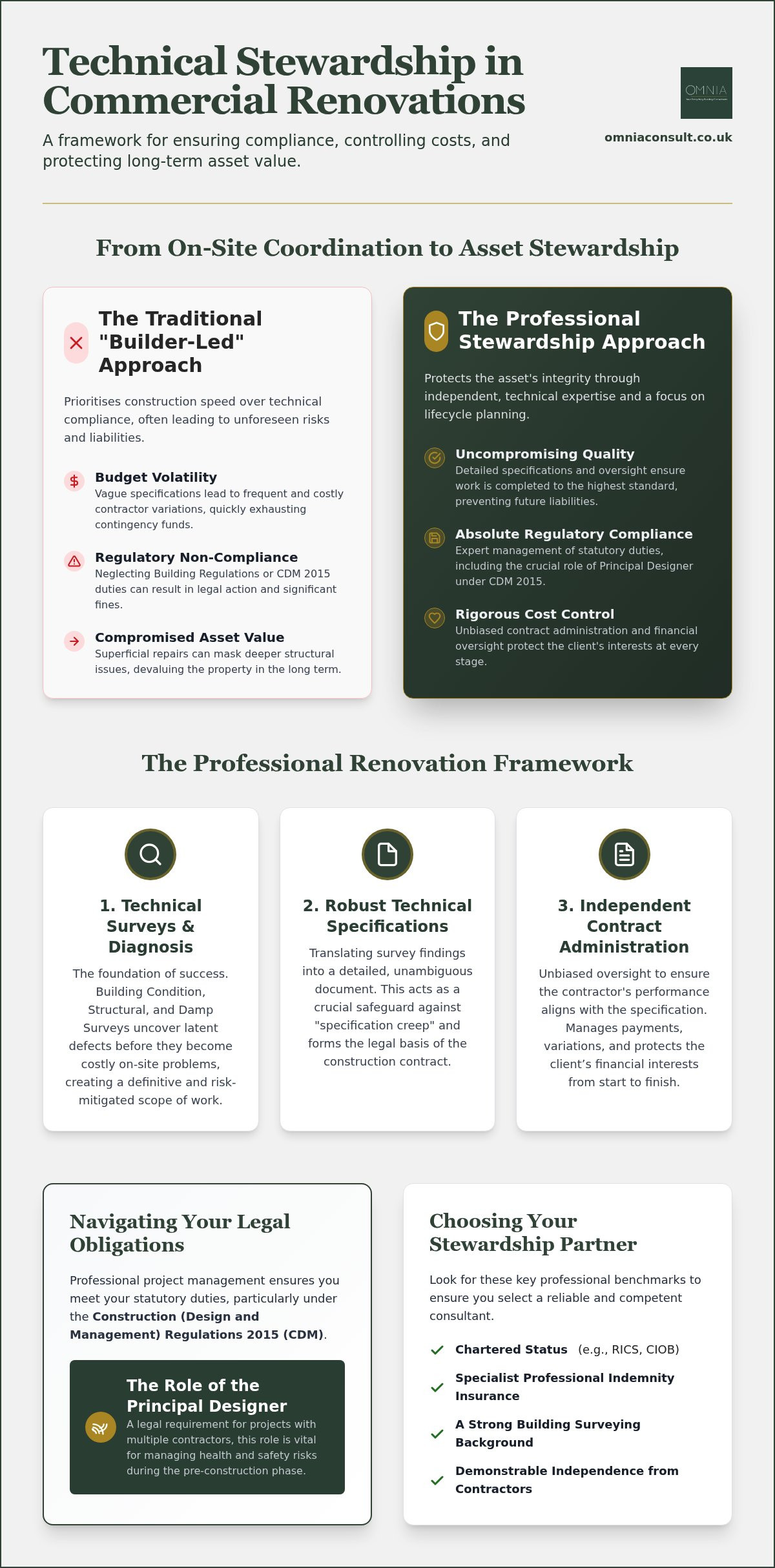
The traditional "builder-led" approach often fails in professional environments because it prioritises construction speed over technical compliance. Contractors are naturally focused on the physical execution of works, but they may lack the independent perspective needed to manage statutory risks or protect the client's financial interests. As we look towards 2026, the focus has shifted toward building lifecycle planning. This forward-thinking strategy ensures that renovations don't just solve immediate defects but also enhance the asset's viability for years to come. Success in this landscape rests on three core pillars: uncompromising quality, absolute regulatory compliance, and rigorous cost control.
The Shift from Coordination to Stewardship
There's a fundamental difference between simple project coordination and professional technical stewardship. Coordination involves managing a schedule; stewardship involves protecting the integrity of the asset. A professional building consultant acts as a steady hand, ensuring that every technical consultant and contractor aligns with the project's long-term goals. This level of oversight is a hallmark of commercial project management companies that specialise in professional property. By acting as a proactive partner, the project manager ensures that technical specifications are followed to the letter, preventing the shortcuts that often lead to future maintenance liabilities.
Common Risks in Unmanaged Renovation Projects
Without professional project management for building renovations, projects frequently fall victim to "specification creep." This occurs when the scope of work gradually expands due to unforeseen issues or poorly defined initial requirements. The consequences are often severe, including:
Budget Volatility: Vague technical specifications lead to frequent contractor variations, which can quickly exhaust contingency funds.
Regulatory Non-Compliance: Neglecting the nuances of Building Regulations or the CDM 2015 duties can lead to legal action and significant fines.
Compromised Asset Value: Poorly executed repairs may solve a cosmetic issue whilst masking a deeper structural problem, ultimately devaluing the property.
Mitigating these risks requires a methodical approach that begins with detailed technical surveys. By identifying potential hurdles before the work starts, a project manager can create a robust framework that keeps the project on track and within budget.
The Professional Building Consultant as Project Manager
Effective project management for building renovations requires more than just an understanding of timelines; it demands a forensic knowledge of building pathology. A professional building consultant brings a surveying background to the table, allowing them to diagnose structural issues or damp problems before they become expensive site variations. This technical expertise ensures that the renovation strategy is rooted in reality rather than optimistic guesswork, providing a steady hand throughout the project's lifecycle.
Independence is the cornerstone of professional stewardship. By maintaining a clear separation from the physical construction services, a consultant provides unbiased oversight during every phase of the works. This independent perspective is particularly valuable during contract administration, where the consultant ensures that the contractor's performance aligns strictly with the technical requirements and that the client's financial interests are protected at every stage.
Technical Surveys: The Foundation of Any Renovation
Building Condition Surveys are the first line of defence against project failure. These surveys identify the true state of a property, uncovering latent defects that could otherwise cause significant delays once works commence. By integrating structural and damp surveys into the initial planning phase, we create a definitive scope of works that mitigates risk. This approach also supports strategic asset management planning, helping property owners categorise renovation tasks into immediate requirements and long-term improvements to protect the building's future value.
Writing Robust Technical Specifications
The quality of your renovation is only as good as the documents that define it. Writing robust technical specifications requires a high level of technical depth to ensure that every material and installation method is clearly documented. When specifications are precise, it creates a level playing field for the tendering process, allowing for fair and comparable bidding amongst contractors. Technical specifications serve as the project’s legal and technical blueprint, providing a clear benchmark for quality control.
Complex renovations often require a multi-disciplinary approach involving structural engineers, architectural designers, and M&E specialists. A professional project manager acts as the central hub for this technical team, ensuring that all inputs are harmonised into a single, cohesive strategy. This unified leadership prevents the technical gaps and conflicting designs that often occur when multiple consultants work in isolation, resulting in a smoother delivery and a more resilient building.
Navigating Regulatory Compliance and CDM 2015
Compliance isn't just a box-ticking exercise; it's a legal safeguard for everyone involved in a project. Under the Construction (Design and Management) Regulations 2015 (CDM 2015), clients have specific legal duties that cannot be ignored. These include ensuring that suitable management arrangements are in place and that health and safety remains a priority from the initial concept. Professional project management for building renovations acts as a steady hand, ensuring that statutory building regulations are met throughout the project lifecycle without stalling progress.
The CDM Principal Designer Role Explained
The CDM 2015 regulations require the appointment of a Principal Designer on any project involving more than one contractor. This role is distinct from the Principal Contractor, who manages the physical construction phase. Instead, CDM Principal Designer services focus on the pre-construction phase, identifying, eliminating, or controlling foreseeable risks during the design process. Appointing this specialist early is vital because it allows safety to be designed into the project structure. This proactive coordination ensures that the health and safety file is comprehensive and that all technical consultants are aligned with the latest safety standards.
Managing Listed Building Consent
Renovating heritage or Grade II listed assets introduces unique challenges that require expert navigation. You must balance modern functional requirements, such as improved energy efficiency, with the strict need to preserve historic architectural integrity. The process of securing listed building consent consultants is essential for these projects. They manage the delicate negotiations with local planning authorities and heritage officers, ensuring that all proposed works are sympathetic to the building's history. Professional stewardship prevents the legal ramifications and significant fines that arise from unauthorised alterations, whilst protecting the long-term value of the historic asset.
By integrating regulatory compliance into the broader strategy, project management for building renovations provides a framework where safety and success go hand in hand. It's about maintaining a controlled, professional environment where every statutory obligation is met with precision.
Contract Administration and Financial Control
Professional project management for building renovations relies on a robust legal and financial framework to succeed. Without a formal contract, the relationship between a client and contractor is vulnerable to ambiguity, which often leads to disputes or delays. The Contract Administrator acts as an independent professional referee, ensuring that both parties fulfil their obligations under the agreed terms. This role is essential for maintaining the momentum of the works whilst protecting the client's financial interests through every stage of the project.
Most commercial renovations in the UK utilise standard forms of construction contracts, such as those provided by the Joint Contracts Tribunal (JCT). Managing these documents requires a methodical approach to ensure that instructions are clear, payments are certified accurately, and any variations to the original scope are costed fairly. This level of oversight provides the transparency needed to maintain a positive working relationship on site.
Steps to Effective Contract Administration
To ensure a project remains on track, it's vital to organise JCT contract administration services at the earliest opportunity. The process begins with regular site inspections to verify that the quality of work matches the technical specifications. Detailed progress reporting keeps the client informed of any potential risks to the programme. As the project nears completion, the Contract Administrator manages the "snagging" process and oversees the defects liability period, ensuring that any minor issues are rectified before the final account is settled.
Cost Control and Risk Mitigation
Financial stewardship is a core component of successful project management for building renovations. It involves more than just tracking expenses; it's about the proactive management of valuations and interim payments. A professional project manager helps you establish a realistic contingency fund, ensuring that budget discipline is maintained even when unforeseen site conditions arise. Professional bid writing also plays a critical role here, as it allows for the selection of a contractor based on their technical competence and track record rather than just the lowest headline price.
By identifying and managing risks before they become expensive variations, a consultant ensures that your investment is protected. If you require expert oversight for your next refurbishment, you can enquire about our contract administration services to ensure your project is delivered with financial precision and technical integrity.
Choosing Your Renovation Project Management Partner
Selecting a partner for project management for building renovations is a decision that impacts the technical integrity and financial health of your asset for decades. It requires a firm that understands the nuances of commercial and professional asset management, moving beyond simple task lists to provide high-level strategic guidance. You need a team that prioritises professional standards, including chartered status and robust professional indemnity insurance. These credentials aren't merely administrative requirements; they are essential markers of accountability and technical competence in a complex industry.
A proactive, holistic approach always outperforms reactive problem-solving. When you work with a partner who anticipates risks, you avoid the costly delays and site variations that plague unmanaged projects. This level of technical stewardship ensures that your renovation remains a controlled investment rather than an unpredictable expense. By choosing a navigator who understands the regulatory landscape and the physical requirements of the built environment, you protect your professional reputation and your property's long-term value.
The OMNIA Difference: Technical Expertise
OMNIA Building Consultants Ltd serves as your trusted navigator through every stage of the refurbishment journey. Our background in architectural design and space planning allows us to offer a more comprehensive perspective than a standard project coordinator. We don't just manage the works; we ensure that the design is functional, the space is optimised, and the materials are fit for purpose. This holistic view is rooted in a deep understanding of the entire building lifecycle, ensuring that today's renovation supports the building's viability for years to come. Our unwavering commitment to regulatory compliance and safety means your project will meet every statutory obligation with precision.
Next Steps for Your Renovation Project
The path to a successful refurbishment begins with a clear, evidence-based understanding of your building's current state. Initiating a professional building condition survey is the most effective way to establish a definitive scope of works and identify latent defects before they impact your programme. Once the technical baseline is established, we can begin a consultation on project oversight, contract administration, and the critical CDM roles required for your specific works. This methodical preparation is what separates a successful renovation from a stressful one.
If you're planning a complex refurbishment and require a steady hand to guide the process, we're here to help. Contact OMNIA Building Consultants Ltd for expert project management support and ensure your next project is delivered with technical precision and financial discipline.
Securing the Future of Your Building Assets
Successful refurbishment requires a transition from reactive repairs to proactive technical stewardship. By integrating detailed surveys with robust contract administration, you move beyond the risks of "builder-led" projects and ensure every pound spent enhances the property's long-term viability. Professional project management for building renovations isn't just a luxury; it's a critical safeguard against regulatory non-compliance and financial volatility.
OMNIA Building Consultants Ltd provides the steady hand needed to navigate these technical landscapes. With our chartered building consultancy expertise and specialist knowledge in CDM 2015 and listed building consent, we offer comprehensive end-to-end support that prioritises your interests. We invite you to Secure Professional Project Management for Your Renovation and protect the integrity of your asset from the initial design through to final completion. Your next project is an opportunity to add lasting value, and we're ready to ensure it's delivered with precision.
Frequently Asked Questions
What is the difference between a project manager and a contract administrator?
A project manager oversees the entire lifecycle of a refurbishment, including high-level strategy and team coordination. In contrast, a contract administrator holds a specific, independent role defined within a construction contract like a JCT. They certify payments, manage variations, and ensure both parties follow the contractual terms. Whilst their duties overlap, the contract administrator's focus is on the formal execution of the contract and protecting the client's financial interests through precise certification.
Do I legally need a project manager for a building renovation in the UK?
There isn't a specific law stating you must hire a project manager, but the CDM 2015 regulations place strict legal duties on the client. You're responsible for ensuring your project is managed safely and professionally. Most commercial clients find that professional project management for building renovations is essential to meet these statutory obligations. Without expert oversight, you risk significant legal liability and potential project failure due to non-compliance with complex UK building laws.
How much does project management for a building renovation typically cost?
Fees for professional project management are based on the complexity and technical scope of the works. Most consultants provide a fee structure that reflects the level of stewardship required, which is often calculated as a percentage of the total construction cost or as a fixed professional fee. It's best to base these costs on a detailed building condition survey, as this ensures the management fee aligns with the actual risks and technical requirements of the asset.
What is the role of a CDM Principal Designer in a renovation project?
The CDM Principal Designer is a statutory role responsible for coordinating health and safety during the pre-construction phase. They work with other technical consultants to identify and eliminate potential risks before the works begin on site. This proactive approach ensures that the design is inherently safe to build and maintain. Their work culminates in the creation of a health and safety file, which is a vital legal document for the long-term management of any commercial asset.
Can I project manage a Grade 2 listed building renovation myself?
Managing a Grade II listed renovation requires specialist expertise that most property owners don't possess. You must navigate the complexities of listed building consent and use traditional materials that satisfy heritage officers. Unauthorised alterations to a listed building are a criminal offence in the UK, carrying the risk of unlimited fines or even imprisonment. Professional project management ensures that your renovation respects the building's historic integrity whilst meeting modern functional requirements through expert consultancy.
How do technical specifications help in controlling renovation costs?
Technical specifications act as the definitive blueprint for your project, leaving no room for contractor guesswork. By detailing every material and installation method, they ensure all bidders provide comparable quotes based on the same high standards. This precision prevents "specification creep" and limits the number of expensive variations that often arise when the scope of work is vague. It's one of the most effective tools for maintaining strict budget discipline and protecting your investment.
What happens if my renovation project does not comply with Building Regulations?
Non-compliance with Building Regulations can lead to serious legal and financial consequences. Local authorities have the power to issue enforcement notices, requiring you to alter or remove any work that doesn't meet the standards. This often results in significant delays and additional costs. Additionally, a lack of compliance certificates can make it impossible to sell or insure the property, effectively devaluing your asset and creating long-term liability for the building owner.
How long does the project management process take for a commercial refurbishment?
The duration of a commercial refurbishment varies significantly based on the building's condition and the project's technical scope. The process begins with several weeks of pre-construction planning, including surveys and securing necessary consents. The construction phase itself depends on the complexity of the works, followed by a defects liability period that usually lasts twelve months. A methodical project management approach ensures that each phase is executed efficiently without compromising on the quality or safety of the build.


