Commercial Project Management Companies: A Guide to Technical Stewardship
- OMNIA Building Consultants

- 11 minutes ago
- 12 min read
What if the most significant threat to your commercial development isn't a fluctuating budget, but a subtle technical oversight or a breach of the CDM 2015 regulations? It's understandable to feel a sense of trepidation when balancing the complexities of listed building consents with the pressure of maintaining a building's long-term value. For many, the anxiety of potential cost overruns or poor contractor performance can overshadow the vision for the asset. Managing a project is rarely just about tracking timelines; it's about navigating a landscape where technical and legal risks can quickly spiral without expert intervention.
By partnering with professional commercial project management companies, you can transform this uncertainty into a structured and seamless journey. You'll discover how technical stewardship protects your assets through rigorous oversight, ensuring every phase of the works adheres to the latest Building Regulations. This guide explores the essential role of professional project management in mitigating risk, whilst safeguarding the long-term viability and integrity of your commercial property.
Table of Contents
What Defines Leading Commercial Project Management Companies?
In a commercial context, Project management is often misunderstood as merely a tool for administrative efficiency or business growth. Leading commercial project management companies view it through a more technical lens: the professional stewardship of a building's entire lifecycle. From the moment a site is acquired to the final handover of a major renovation, this discipline ensures that the physical asset remains safe, compliant, and structurally sound. It's a role that requires a blend of high-level strategy and granular technical detail.
We often describe this approach as acting as a "Trusted Navigator." It isn't just about ticking boxes on a schedule. It requires a deep understanding of the built environment to guide clients through complex regulatory landscapes, such as the CDM 2015 regulations or the intricacies of planning applications. By maintaining a holistic view, a technical partner ensures that immediate physical requirements align with the long-term viability of the asset. This steady hand is what prevents a project from descending into a series of reactive fixes.
The Distinction Between Building Consultancy and General Project Management
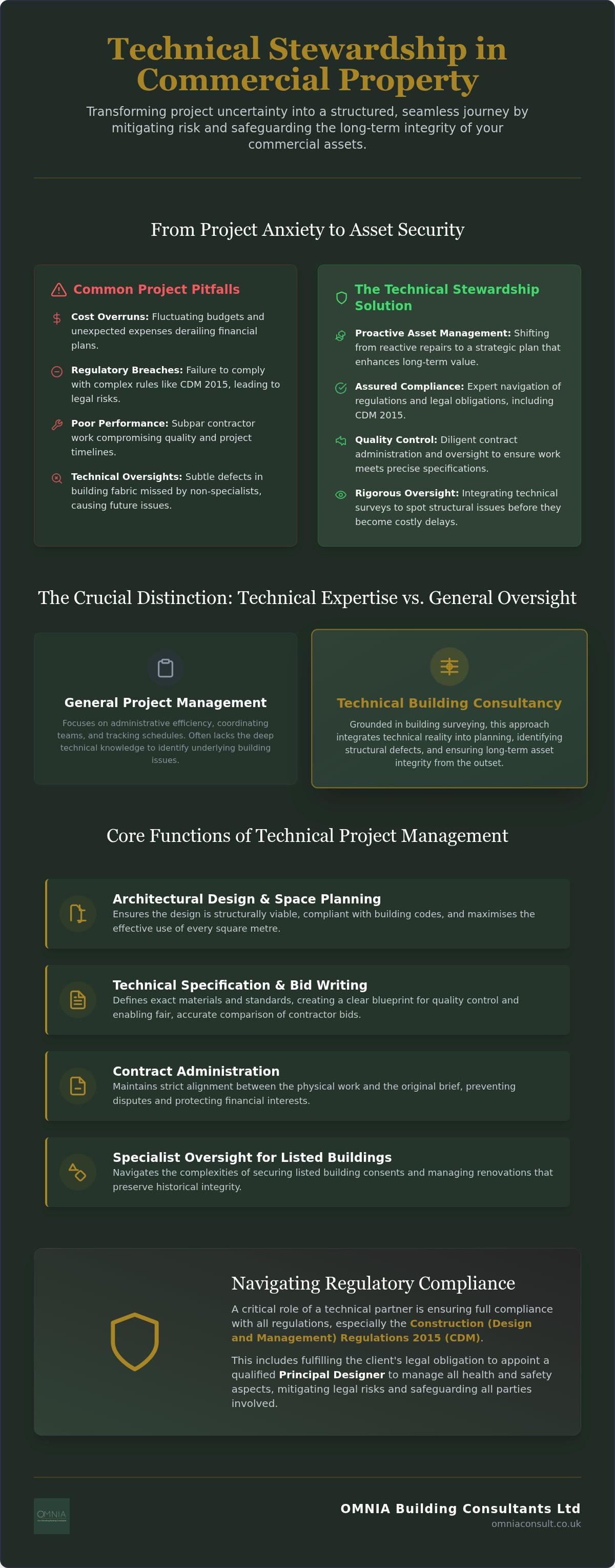
A primary differentiator for high-calibre commercial project management companies is a foundation in building surveying. General project managers might excel at coordinating teams, but they often lack the technical depth to spot a structural defect or identify a damp issue before it becomes a costly delay. By integrating commercial building condition surveys into the initial planning phase, consultants can build a project roadmap based on technical reality rather than optimistic assumptions. This technical knowledge is vital during structural renovations, where an overlooked detail in a building's fabric could lead to significant legal or financial complications.
The Value of Professional Stewardship for Property Assets
Professional stewardship goes beyond transactional oversight. It's about maintaining and enhancing the value of a property over many years, not just the duration of a contract. A project manager acts as a shield, protecting the client from unnecessary financial exposure and legal risks. This involves a shift from reactive repairs to proactive asset management planning. By focusing on technical integrity, a steward ensures that a renovation doesn't just look good on completion but continues to perform efficiently for the next decade. This comprehensive approach transforms a simple building project into a strategic investment in the property's future.
The Core Functions of Technical Project Management
The scope of work delivered by leading commercial project management companies extends far beyond simple site coordination. It involves a rigorous, end-to-end service that begins with architectural design and space planning, ensuring that every square metre of a building is utilised effectively. By establishing these technical foundations early, a project manager ensures the design is not only aesthetically pleasing but also structurally viable and compliant with all relevant building codes. This proactive stance prevents expensive mid-project adjustments that often plague less structured developments.
Contract administration serves as the mechanism that holds the entire process together. It isn't just about paperwork; it's about ensuring the physical work remains strictly aligned with the original brief. Through diligent oversight, a technical partner ensures that quality standards are met and that the project moves forward without the friction of contractor disputes. This level of control is essential for maintaining the project's pace whilst protecting the client's financial interests. If you're preparing for a new development, you might consider how professional project management services can simplify your regulatory journey.
Technical Specification and Bid Writing
Precise technical specifications act as the blueprint for quality control throughout the construction phase. These documents define the exact materials, methods, and standards required, leaving no room for ambiguity. When specifications are detailed and accurate, the subsequent bid writing process becomes much more effective. It allows for a fair comparison of contractor quotes, ensuring that you select delivery partners based on their ability to meet technical requirements rather than just the lowest price. This clarity reduces the likelihood of variations and "hidden extras" that often lead to budget overruns in commercial projects.
Specialist Oversight for Listed and Heritage Buildings
Renovating historic assets requires a nuanced approach that generalists often overlook. The complexities of project management for listed building renovation involve a delicate balance between preserving architectural integrity and introducing modern functionality. A technical steward manages the entire process of securing listed building consent and navigating planning applications, acting as a liaison with local authorities. This expertise ensures that heritage features are protected whilst the building is brought up to contemporary standards for safety and efficiency.
Safety remains a non-negotiable priority in every phase of the project. This is particularly true when adhering to the Construction (Design and Management) Regulations 2015. These regulations place significant legal duties on the client, which a professional project manager helps to discharge by integrating safety considerations into the design and execution phases. By managing these risks effectively, you ensure the project is delivered safely, legally, and to the highest professional standard.
Navigating Regulatory Compliance and CDM 2015
Regulatory compliance is the cornerstone of any successful commercial development. In the UK, health and safety isn't merely a set of guidelines; it's a strict legal framework that dictates how every construction site must operate. Experienced commercial project management companies understand that safety must be integrated into the design and planning phases from the very beginning. Neglecting these duties doesn't just put workers at risk; it exposes the client to severe legal consequences, including substantial fines and immediate project stoppages by the Health and Safety Executive. A professional consultant acts as a shield, ensuring that every technical and legal requirement is met with precision.
Ensuring that every phase of a project meets current building regulations requires a meticulous approach to Technical Project Management. This involves constant vigilance, from verifying structural calculations to ensuring fire safety standards are exceeded. By maintaining this level of technical stewardship, a consultant protects the client's reputation and the long-term viability of the building asset. This steady hand is essential for navigating the complexities of the modern built environment without falling foul of evolving statutory requirements.
The Role of the CDM Principal Designer
Under the CDM 2015 regulations, the role of the Principal Designer is a legal necessity for any project involving more than one contractor. This individual is responsible for planning, managing, and monitoring health and safety during the pre-construction phase. It's vital to integrate CDM Principal Designer services into the project team from the earliest possible stage. By doing so, you ensure that significant risks are identified and eliminated or controlled before any physical work begins on site. This proactive risk management is what separates a controlled project from one fraught with unforeseen hazards and legal exposure.
Securing Planning Permission and Listed Building Consent
Managing complex planning applications is a delicate process that requires both technical precision and diplomatic skill. For those managing historic assets, navigating Grade 2 listed building restrictions adds a layer of complexity that can easily stall a project. Commercial project management companies act as the bridge between the client's vision and the stringent requirements of local planning authorities. This collaborative approach involves detailed negotiations with planning officers to ensure that proposed works are sympathetic to the building's heritage whilst meeting modern operational needs. Whether you're seeking a change of use or a structural renovation, having a professional steward to lead these discussions is essential for securing the necessary consents without unnecessary delays.
Selecting a Commercial Project Management Partner
Choosing between various commercial project management companies is a decision that directly impacts the long-term health of your property asset. It's easy to focus on administrative efficiency, but the most successful projects are led by firms that offer technical stewardship. This model goes beyond simply tracking dates and budgets; it involves a deep commitment to the building's integrity and a thorough understanding of UK building law. A partner with a national perspective can apply broad industry insights to local challenges, ensuring your project remains compliant and structurally sound from inception to completion.
Key Criteria for Evaluation
When comparing different commercial project management companies, you should assess their specific experience with your building type. A firm that excels in modern office fit-outs may lack the specialised knowledge required for complex industrial complexes or Grade 2 listed heritage sites. You should also evaluate their approach to contract administration and cost control. Are they reactive, or do they have a structured process for managing variations? It's often beneficial to choose a firm with in-house capabilities in building surveying and CDM oversight. This integration ensures that technical risks are identified during the initial planning phase, rather than being discovered mid-construction when they are most expensive to rectify.
The Importance of a Supportive Partnership
The relationship between a building consultant and a client should be built on a foundation of mutual trust and proactive communication. This is where the concept of "quiet expertise" becomes invaluable. You don't need a partner who uses high-pressure tactics or complex business jargon; you need a steady hand to guide you through the regulatory landscape. A proactive partner identifies potential pitfalls, such as hidden damp issues or structural weaknesses, before they escalate into significant problems. This forward-thinking behaviour provides peace of mind, whilst ensuring the project stays on course and within the original brief.
The ideal relationship is one where the consultant acts as a technical extension of your own team, combining the rigorous standards of a surveyor with the strategic vision of a project manager. By choosing a partner who prioritises the long-term viability of your asset, you ensure a smoother renovation process and protect the building's future value. If you're looking for a partner who combines technical depth with a supportive approach, you can enquire about our project management services to see how we can assist with your next development.
OMNIA: Your Technical Partner for Complex Building Works
OMNIA Building Consultants stands apart from generic commercial project management companies by operating as a dedicated technical partner. We don't view a project as a series of administrative tasks; we see it as a complex entity that requires precise stewardship. Our integrated approach brings together building surveying, architectural design, and project management into a single, cohesive service. This ensures that every decision made is grounded in technical reality and a deep respect for the building's fabric. By acting as a steady hand, we guide you through the complexities of the built environment with a focus on reliability and peace of mind.
Our commitment to regulatory compliance and listed building expertise isn't a secondary service; it's the core of our practice. We understand that managing a historic or complex asset requires more than just a spreadsheet. It needs a professional who can navigate the nuances of heritage restrictions whilst ensuring modern functionality and safety. This holistic view allows us to protect your commercial assets through every phase of the works, maintaining the continuity and integrity of the project from inception to completion.
Why Technical Expertise Matters
Technical expertise is the foundation of long-term asset viability. By conducting detailed building condition surveys at the outset, we identify potential structural or maintenance issues that could derail a renovation. This proactive behaviour allows us to build a project roadmap that's both realistic and resilient. Additionally, our architectural and space planning services add value from the very first day. We don't just manage the works; we help you reimagine how your space can be utilised to its full potential, ensuring that your investment delivers both immediate performance and sustained value over time. Working with commercial project management companies that possess this depth of technical knowledge transforms a standard renovation into a strategic asset enhancement.
Next Steps for Your Project
Beginning a complex renovation or development can feel daunting, but it doesn't have to be. Our initial consultation process is designed to be thorough yet supportive, allowing us to assess your project's specific needs and technical requirements. We take the time to understand your vision, the building's history, and any regulatory hurdles that may lie ahead. This methodical assessment provides a clear path forward, giving you the confidence that your asset is in the hands of a "Trusted Navigator."
If you're planning a project that requires a high level of technical oversight and a commitment to integrity, we invite you to discuss your requirements with us. Our team is ready to support you through every phase of the building lifecycle, from initial survey to final completion. To start the conversation and ensure your project is built on a foundation of professional stewardship, you can enquire about our commercial project management services today.
Securing the Future of Your Commercial Property
Navigating a complex renovation requires a shift from simple administrative oversight to a model of technical stewardship. By prioritising building integrity and regulatory compliance, you ensure that your asset remains safe and valuable for years to come. The most effective commercial project management companies act as more than just coordinators; they're technical partners who understand the intricate relationship between architectural design and structural health. This holistic approach prevents costly disputes and ensures every phase of your project adheres to the highest professional standards.
OMNIA Building Consultants provides this steady hand through our integrated service model. As specialist listed building consultants with in-house CDM Principal Designer expertise, we bridge the gap between complex heritage requirements and modern safety regulations. Our approach combines holistic technical surveying with rigorous project management to protect your property at every turn. If you're ready to move forward with confidence, contact OMNIA Building Consultants for expert project oversight. We're here to guide you through the complexities of the built environment, ensuring your vision is realised with precision and care.
Frequently Asked Questions
What is the difference between a construction manager and a commercial project manager?
Construction managers focus on on-site physical delivery and labour coordination during the building phase. In contrast, commercial project management companies oversee the entire project lifecycle, from initial architectural design and surveying to final completion. Whilst a construction manager handles the practicalities of building, a project manager acts as a technical steward for the client's interests, ensuring the project remains compliant with building regulations and aligned with long-term asset management goals.
Do I legally need a CDM Principal Designer for my commercial renovation?
You are legally required to appoint a Principal Designer under the CDM 2015 regulations if your project involves more than one contractor. This role is essential for managing health and safety risks during the pre-construction phase. Failing to make this appointment means the client must assume these significant legal duties themselves. Technical project managers often provide this service in-house to ensure safety is integrated into the design from the earliest possible stage.
How do commercial project management companies charge for their services?
Fees for commercial project management companies are typically structured as a percentage of the total construction cost or as a fixed fee based on a defined scope of work. Some firms may use hourly rates for specific technical tasks, such as bid writing or structural surveys. The exact structure depends on the project's complexity and the level of stewardship required. It's best to discuss your requirements to receive a proposal tailored to your project's scale.
Can a project management company help with listed building consent?
Specialist project management firms provide essential support in securing listed building consent for complex renovations. This involves preparing detailed architectural drawings and coordinating with local planning officers to ensure works are sympathetic to the building's heritage. They act as a "Trusted Navigator" through the stringent restrictions associated with historic assets. By combining technical surveying with planning expertise, they ensure that proposed changes are functional whilst preserving the building's architectural integrity.
What is the role of contract administration in a building project?
Contract administration involves managing the legal and procedural aspects of the building contract between the client and the contractor. The administrator ensures that both parties fulfil their obligations, manages payment valuations, and handles any variations to the work. This role is vital for maintaining quality control and preventing disputes. It provides a structured framework for the project, ensuring the physical works remain strictly aligned with the technical specifications and the client's financial targets.
How does technical specification writing reduce my project risks?
Technical specifications act as a precise blueprint for the quality of materials and workmanship required. By removing ambiguity, these documents ensure that contractors provide accurate bids and understand exactly what is expected of them. This reduces the risk of expensive mid-project variations and ensures the final build meets all relevant building regulations. Clear specifications are the foundation of quality control, protecting the long-term integrity and value of the commercial building asset.
What happens if I manage a commercial project without professional oversight?
Managing a project without professional oversight significantly increases the risk of cost overruns, contractor disputes, and regulatory non-compliance. Without a technical steward, subtle structural issues or legal requirements, such as CDM 2015 duties, can easily be overlooked. This exposure can lead to substantial fines, project stoppages, and a loss of building value. Professional oversight provides a steady hand, mitigating these risks and ensuring a seamless transition from planning to final completion.
How do you ensure a commercial project stays within budget?
Staying within budget requires a combination of precise cost control and proactive risk management. This begins with accurate bid writing and technical specifications to ensure initial quotes are realistic. During the works, diligent contract administration allows for the monitoring of valuations and the management of any necessary changes. By identifying potential technical issues early through building condition surveys, project managers prevent the unforeseen expenses that typically cause budgets to spiral out of control.