
Building Asset Lifecycle Management: A Strategic Guide to Technical Stewardship
- OMNIA Building Consultants

- 18 hours ago
- 11 min read
Could a single overlooked survey be the catalyst for an unmanageable spike in your total cost of ownership? It's a frustration shared by many commercial property owners who find themselves trapped in a cycle of reactive repairs and escalating expenditure. You've likely felt the pressure of maintaining safety standards whilst trying to keep a firm grip on your capital roadmap. Effective building asset lifecycle management isn't merely a software solution; it's a rigorous discipline of technical stewardship that safeguards the long-term viability of your portfolio.
By moving away from unpredictable "break-fix" habits, you can ensure your assets remain compliant with the latest 2026 safety standards and structurally sound for years to come. This article provides a comprehensive roadmap for mastering the complexities of commercial property, from initial acquisition through to eventual disposal. We'll explore how professional surveys, regulatory oversight, and proactive planning create a clear path toward reduced ownership costs and total peace of mind. You'll gain the insights needed to transform technical data into a strategic asset, ensuring every decision is backed by professional expertise and a holistic view of your building's future.
Table of Contents
Defining Building Asset Lifecycle Management in the UK Market
Building asset lifecycle management is the strategic process of managing a building’s physical components from inception through to eventual retirement. In the UK market, this discipline involves a delicate balance between operational efficiency and strict regulatory compliance, particularly following the comprehensive reforms of the Building Safety Act 2022. It's essentially the holistic stewardship of a property to ensure long-term viability and value. By adhering to core Asset Management Principles, owners can shift from a "fix-on-fail" mindset to a model of professional oversight.
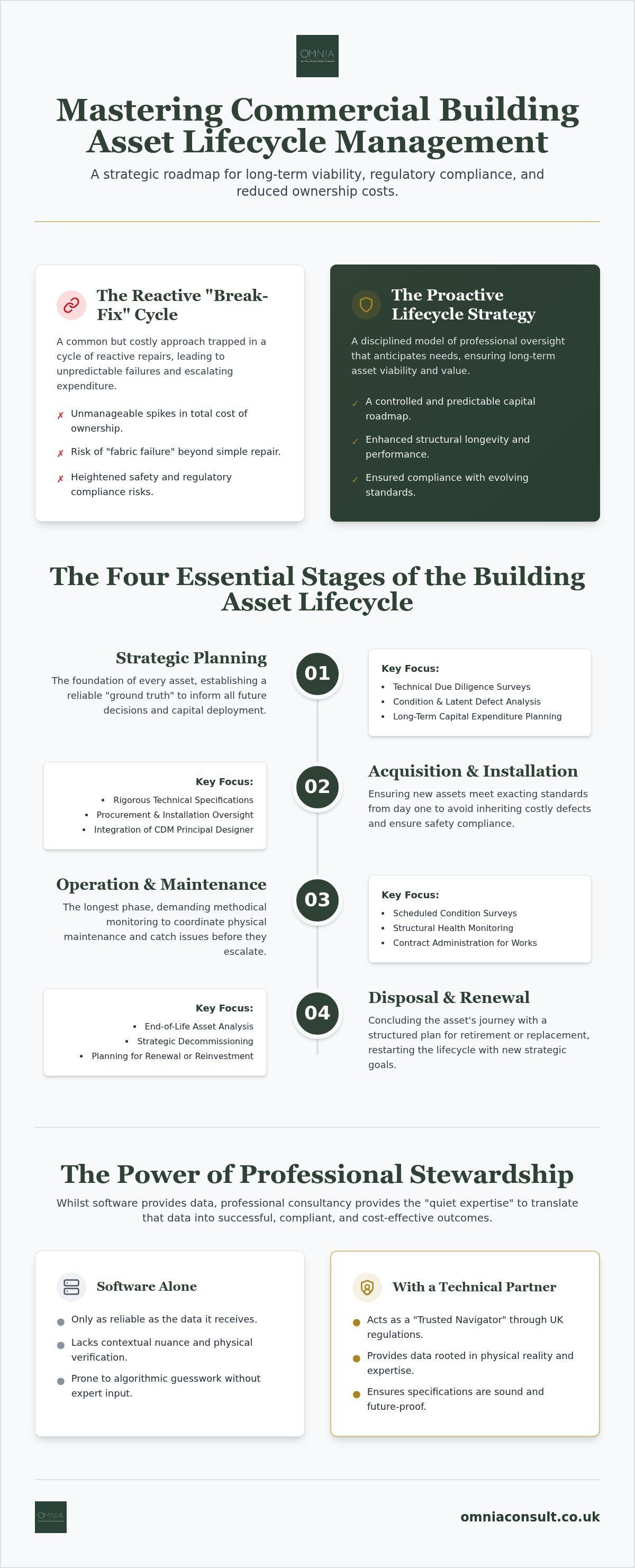
Transitioning away from reactive maintenance is vital to prevent "fabric failure," where the underlying structure of a building degrades beyond simple repair. Instead, a proactive lifecycle strategy anticipates the natural decay of materials and systems. This approach ensures that capital is deployed efficiently, preventing the sudden, large-scale expenditures that often follow years of neglect. It allows for a controlled environment where every component is monitored, maintained, and replaced according to a structured programme.
The Importance of Technical Stewardship
Whilst automated software alerts offer convenience, they lack the contextual nuance provided by professional consultancy. Digital tools are only as reliable as the data they receive; technical stewardship ensures that this data is rooted in physical reality rather than algorithmic guesswork. A "Trusted Navigator" guides property owners through the complex maze of UK building regulations, ensuring that every intervention is legally compliant and structurally sound. This level of professional oversight is critical when drafting technical specifications for replacement assets. It ensures that new installations meet modern energy efficiency and safety standards rather than merely replicating outdated systems, ultimately future-proofing the building against evolving legislative demands.
Commercial vs. Residential Lifecycle Needs
The requirements for commercial and professional assets differ significantly from domestic properties due to high-intensity usage patterns. Office blocks, retail centres, and industrial units experience constant footfall and mechanical strain, which naturally accelerates the lifecycle of both plant and fabric. This intensity makes building asset lifecycle management a non-negotiable priority for commercial landlords who must maintain high standards of service delivery.
Commercial lease structures, such as Full Repairing and Insuring (FRI) agreements, also dictate how lifecycle responsibilities and costs are shared between landlords and tenants. Professional clients require precise asset management planning to facilitate accurate budget forecasting and avoid disputes over service charge recovery. Without a detailed roadmap for future capital expenditure, businesses risk sudden financial shocks. A structured approach allows for the gradual accumulation of funds for major works, such as roof replacements or HVAC overhauls, ensuring the building remains a performing asset rather than a liability.
The Four Essential Stages of the Building Asset Lifecycle
Effective building asset lifecycle management is most successful when viewed as a cohesive four-stage journey rather than a series of isolated financial events. It begins with strategic planning, moves through acquisition, endures a decades-long operational phase, and eventually concludes with decommissioning or renewal. Each stage requires distinct technical oversight to ensure the asset remains a performing part of the portfolio rather than a mounting liability. Professional stewardship at every juncture prevents the fabric failure mentioned previously, ensuring that capital is deployed with precision.
Stage two involves acquisition and installation, where technical specifications must be rigorously met to avoid inheriting latent defects during the procurement phase. Stage three, operation and maintenance, is the longest phase, demanding scheduled surveys and structural monitoring to catch issues before they escalate. This methodical approach provides property owners with the peace of mind that their investments are being managed with "quiet expertise."
Planning: The Foundation of Every Asset
Success starts with the ground truth. Professionals utilise building condition surveys to establish a robust baseline for all future management decisions. This isn't just about identifying visible wear; it's about assessing structural integrity and damp risks before an asset management plan is ever finalised. By integrating space planning at this early stage, you ensure that your assets remain fit for purpose even as business needs shift. Adopting BIM for Asset Data Management provides a digital golden thread of information that carries through the entire lifecycle, allowing for seamless transitions between stages. If you're unsure of your current baseline, a professional assessment is the first step toward clarity.
Utilization and Decommissioning
The operational phase is the longest part of the journey. We're currently seeing a shift from simple preventive maintenance to more sophisticated predictive maintenance. This transition relies on technical data to identify potential failures before they occur, significantly reducing the total cost of ownership. Whilst many competitors focus solely on the middle years, the decommissioning phase is where significant risks reside. Technical requirements for decommissioning must focus on regulatory compliance and site safety, particularly when dealing with hazardous materials or complex structural removals. Commercial project management companies provide the necessary oversight to manage end-of-life asset replacement, ensuring that disposal is safe, legal, and cost-effective. Professional asset management planning ensures that this final stage is as controlled and predictable as the first.
Why Technical Surveys are the Foundation of Asset Stewardship
Modern building asset lifecycle management often relies heavily on digital dashboards and IoT sensors. Whilst these tools offer real-time visibility, they're only as effective as the data fed into them. Professional surveys provide the "ground truth" that sensors often miss, such as the subtle signs of structural movement or the early stages of masonry decay. Relying solely on automated alerts can lead to a false sense of security, whereas a physical inspection by a chartered surveyor identifies latent defects before they manifest as costly emergencies.
Professional surveys are the bedrock of Asset Lifecycle Management Best Practices, ensuring that every decision is based on verified physical condition rather than theoretical models. By capturing the actual state of the building fabric, owners can protect the capital value of their assets and prevent catastrophic failures that disrupt business continuity. This level of technical stewardship transforms a building from a collection of components into a well-understood, manageable asset.
Condition Surveys vs. Structural Assessments
It's important to distinguish between the various levels of professional oversight. A building condition survey typically focuses on the general state of the property fabric, identifying maintenance needs and immediate repairs. In contrast, a structural assessment is a deeper analysis of the building's load-bearing components. Knowing when to commission each is vital for effective planning. For instance, if you're planning a significant change of use or installing heavy machinery, a deep structural analysis is mandatory to ensure the frame can support the new loads. These results directly inform the technical specifications for future repair contracts, ensuring that works are precisely targeted and legally compliant.
The Role of Damp and Fabric Surveys
Moisture ingress is a silent threat to commercial assets. Specialist damp surveys are essential for protecting sensitive professional equipment, such as server rooms or high-precision laboratories, where humidity levels must remain constant. Identifying the root cause of damp, whether it's rising, penetrating, or condensational, is the only way to implement a permanent solution that protects the building fabric over the long term.
For historic or listed buildings, fabric surveys are even more critical. These assets require a nuanced understanding of traditional materials and construction methods to ensure that any remedial work respects the building's heritage whilst meeting modern safety standards. Using this granular survey data allows portfolio managers to prioritise capital expenditure effectively. Instead of spreading a budget thinly across multiple sites, you can direct funds to the areas of highest risk, ensuring the long-term integrity of the entire portfolio.
Strategic Planning for Long-Term Asset Viability and Compliance
Strategic planning for long-term viability requires a deep understanding of the UK's shifting legal landscape. Building asset lifecycle management is not just a financial exercise; it's a legal necessity. By 2026, compliance requirements for fire safety and environmental standards have become more stringent, with new regulations like the Building Safety Levy and second staircase requirements for taller residential buildings coming into force. A scheduled maintenance plan is no longer optional if you want to satisfy insurance providers and meet your landlord obligations.
Regulatory Compliance and Safety
The CDM 2015 regulations significantly impact how assets are managed throughout their lifespan. Integrating CDM Principal Designer services into your strategy ensures that safety is designed-in from the earliest stages of a project. This proactive approach prevents the need for costly retrofitting later. When upgrades are required, utilising complex planning application support ensures that technical specifications align with both your operational goals and local authority requirements. This oversight is vital for maintaining the "golden thread" of information required for modern buildings. Technical specifications must also account for future trade regulations, such as the UK’s Carbon Border Adjustment Mechanism (CBAM) arriving in 2027, which may affect the procurement costs of essential materials like steel and cement for asset replacement.
Managing Heritage and Listed Assets
Listed buildings present a unique set of challenges within building asset lifecycle management. You cannot simply replace a window or update a heating system without considering the historical significance of the fabric. Navigating listed building consent requires expert consultancy to ensure that modern operational needs don't clash with preservation duties. Heritage assets often require a more frequent survey cycle than modern commercial builds. This is because traditional materials react differently to environmental stressors. Balancing these needs requires a specialised approach that respects the past whilst preparing for the future.
Scheduled maintenance is the glue that holds a portfolio together. It protects the structural integrity of the building and ensures that your technical stewardship is visible to stakeholders. If you need assistance aligning your portfolio with current standards, OMNIA provides the professional regulatory compliance and planning expertise required for long-term success.
The Consultant’s Role in Navigating Complex Asset Lifecycles
Professional building consultants serve as the technical partners necessary to turn raw data into a cohesive strategy. Whilst software can flag a potential issue, it cannot navigate the nuances of a complex commercial lease or negotiate the finer points of a technical specification. This human-led approach is the heart of effective building asset lifecycle management. Consultants translate survey findings into actionable project plans, ensuring that every pound of capital expenditure is directed toward the most critical areas of the building's future.
Contract Administration and Project Oversight
Effective stewardship requires a steady hand during the execution of works. Contract administration is the mechanism that ensures lifecycle renewals are completed to the exact technical specification required. This role is particularly vital in managing the delicate relationship between landlords, tenants, and contractors during asset works. By providing independent oversight, a consultant prevents the common pitfall of "scope creep" during major refurbishments, which can otherwise derail budgets. Rigorous quality control measures ensure that contractors adhere to the high standards set out in the initial planning phase, maintaining the integrity of the asset for the next stage of its journey.
Strategic Asset Management Planning (SAMP)
A Strategic Asset Management Planning (SAMP) approach moves beyond merely maintaining a physical structure. It involves developing a building asset management strategy that aligns directly with your broader business goals. Professional consultants help forecast long-term capital expenditure (CapEx), providing a clear financial roadmap that prevents sudden shocks to the balance sheet. This transition from managing buildings to managing strategic business assets is what separates market leaders from those caught in reactive cycles.
The appointment of the right specialists for lifecycle renewals is a critical decision point. Professional bid writing for construction projects ensures that the tendering process is transparent, competitive, and focused on technical competence. By drafting precise technical specifications and evaluating bids with a surveyor's eye, consultants ensure that you partner with contractors who share your commitment to long-term stewardship. This end-to-end support provides the peace of mind that your portfolio is not just being maintained, but is being professionally guided through every complexity of the modern built environment.
Securing the Future of Your Commercial Portfolio
Mastering building asset lifecycle management is the difference between a portfolio that drains resources and one that delivers enduring value. By prioritising professional technical surveys over automated guesswork, you establish a reliable "ground truth" that safeguards both structural integrity and capital value. A proactive four-stage strategy, supported by rigorous contract administration and regulatory oversight, ensures your assets remain compliant with the latest 2026 standards whilst preventing the financial shocks of reactive repairs.
Professional stewardship isn't just about maintenance; it's about making informed, strategic decisions that reduce the total cost of ownership over decades. Whether you're navigating the nuances of listed building compliance or require comprehensive CDM Principal Designer services, having a steady technical partner ensures every specification meets the highest chartered standards. OMNIA provides the expert technical consultancy needed to guide commercial and professional assets through every complexity of their journey.
Secure your property portfolio with professional asset management planning from OMNIA. With a structured roadmap and professional oversight in place, you can move forward with the peace of mind that your property's long-term viability is being managed with precision.
Frequently Asked Questions
What is the primary goal of building asset lifecycle management?
The primary goal of building asset lifecycle management is to maximise the value and longevity of a property whilst minimising its total cost of ownership. This is achieved through proactive technical stewardship that coordinates maintenance, regulatory compliance, and strategic planning. By moving away from reactive "break-fix" models, property owners ensure their assets remain safe, efficient, and structurally sound throughout their entire operational life, ultimately protecting the capital investment.
How often should a commercial building condition survey be conducted?
A commercial building condition survey should typically be conducted every three to five years to maintain an accurate baseline of the property's state. However, high-intensity assets or older structures may require more frequent inspections to catch latent defects early. Regular surveying ensures that your asset management plan remains data-led and reflects the actual physical condition of the fabric, allowing for precise budget forecasting and the prevention of catastrophic component failure.
What is the difference between asset management and facilities management?
Asset management focuses on the long-term strategic and financial performance of a building, covering its entire lifecycle from acquisition to disposal. In contrast, facilities management deals with the day-to-day operational requirements, such as cleaning, security, and immediate repairs. Whilst facilities management keeps the building functioning on a daily basis, asset management ensures the property remains a viable, high-performing investment through professional technical oversight and capital expenditure planning.
Does asset lifecycle management apply to listed buildings?
It's particularly critical for listed buildings where traditional materials and heritage restrictions demand a specialised approach. Managing these assets requires securing listed building consent for many repairs or renewals, making a structured lifecycle plan essential. Because historic fabric reacts differently to environmental stressors, these properties often require more frequent surveys and bespoke technical specifications to ensure that modern operational needs don't compromise the building's historical integrity.
How does the CDM Principal Designer role fit into asset management?
The CDM Principal Designer role ensures that health and safety considerations are integrated into the asset's lifecycle from the earliest planning stages. By coordinating the pre-construction phase, the Principal Designer identifies and eliminates potential risks before works begin on site. This proactive involvement is a key pillar of regulatory compliance, ensuring that all future maintenance and renewal projects are executed safely and meet the rigorous standards of the CDM 2015 regulations.
What are the risks of neglecting a building asset lifecycle plan?
Neglecting a structured plan leads to unpredictable repair costs and a significant increase in the total cost of ownership. Without professional oversight, properties are prone to "fabric failure," where minor issues escalate into major structural defects. Owners risk falling behind on evolving UK safety standards, potentially leading to legal liabilities, insurance complications, and a decline in the asset's market value due to poor maintenance records and lack of technical data.
Can asset lifecycle management help reduce commercial insurance premiums?
Implementing a building asset lifecycle management strategy can lead to more favourable insurance terms. Insurers value the "quiet expertise" of a documented maintenance and survey history, as it demonstrates a commitment to risk mitigation and structural integrity. By providing evidence of regular condition surveys and proactive damp management, property owners prove that the building is being managed to professional standards, potentially reducing the perceived risk and associated premiums.
How do technical surveys inform the procurement of new building assets?
Technical surveys provide the "ground truth" required to draft precise technical specifications for new or replacement assets. Rather than merely replicating outdated systems, survey data allows consultants to specify modern, energy-efficient components that meet current fire safety and environmental regulations. This ensures that procurement decisions are based on the actual needs of the building fabric and the long-term strategic goals of the business, preventing the inheritance of latent defects.


