Listed Building Renovation: A Project Management Guide
- OMNIA Building Consultants

- 10 minutes ago
- 12 min read
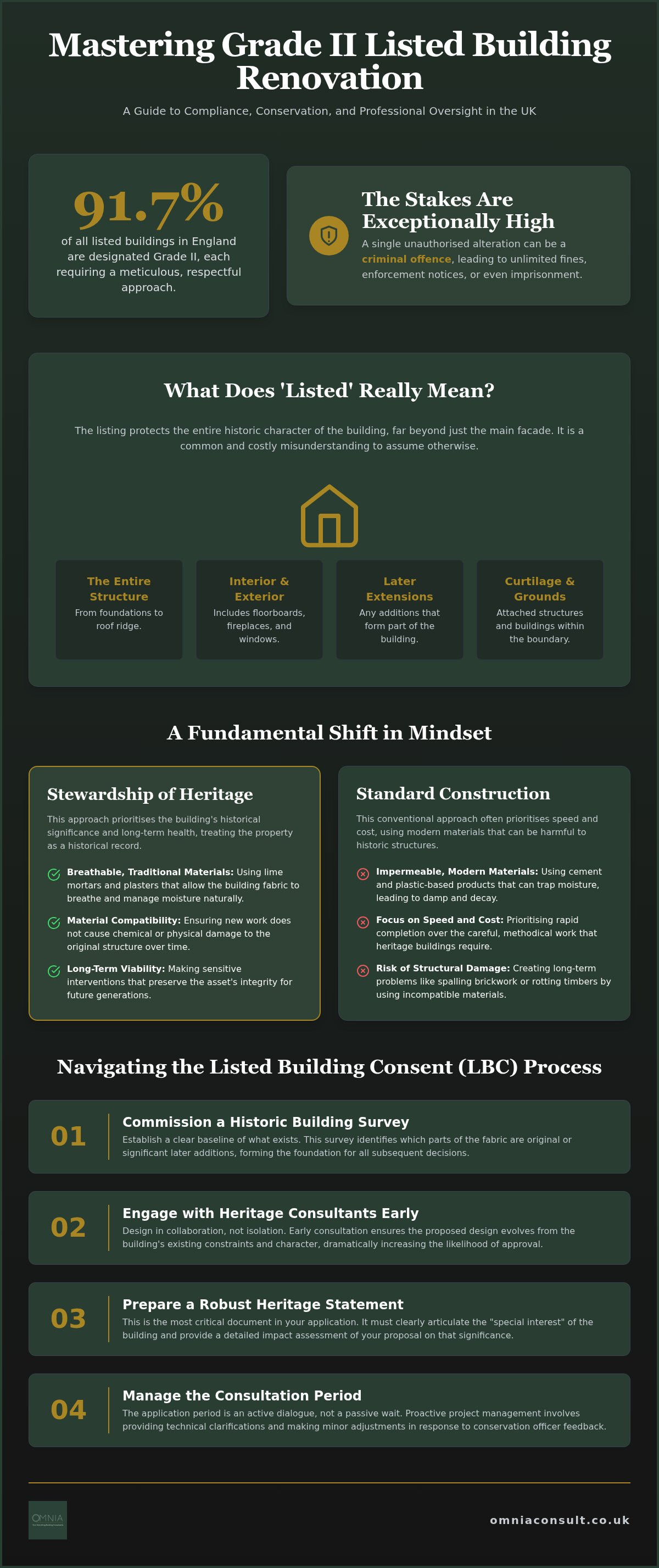
In the United Kingdom, a single unauthorised alteration to a protected structure can result in criminal prosecution, making the stakes of heritage work exceptionally high. If you feel overwhelmed by the weight of stewardship, you are certainly not alone. Grade II structures account for 91.7% of all listed buildings in England, and each one requires a meticulous, respectful approach to change. Professional project management for listed building renovation is therefore less about simple construction and more about navigating a rigid legal framework whilst preserving the architectural soul of the property.
It is natural to feel a sense of trepidation when balancing 21st-century living requirements with the strict demands of a conservation officer. This guide will help you master these complexities by providing expert guidance on compliance, conservation, and professional oversight. We will explore the nuances of the Listed Building Consent process, explain the "reasonable provision" basis for energy efficiency, and show you how to coordinate specialist craftspeople. You will gain the clarity needed to lead your renovation with confidence, ensuring the building's integrity remains intact for the next generation.
Table of Contents
What Defines a Grade 2 Listed Building Renovation Project?
A Grade 2 listing is often misunderstood as a protection that only applies to the exterior of a property or specific ornamental features. In reality, the designation covers the entire structure, including the interior, any later extensions, and often the "curtilage" buildings within the grounds. Understanding What is a Listed Building? is the first step in any successful project, as it establishes that every floorboard, fireplace, and window frame contributes to the asset's historic character. Effective project management for listed building renovation begins with this holistic understanding of the building's protected status.
Distinguishing between routine maintenance and material alteration is the primary challenge for any owner. Whilst regular repairs using identical materials are generally encouraged, any work that changes the character of the building requires formal consent. This distinction is rarely black and white. Replacing a rotten timber sash with a modern plastic alternative is a clear breach, but even "like-for-like" timber replacements can trigger the need for professional consultation if the profile or glazing method changes. Professional oversight ensures that the boundary between maintenance and alteration is never crossed without authorisation.
The Legal Significance of Grade 2 Listing
Undertaking unauthorised work on a listed building isn't just a civil planning dispute; it's a criminal offence. The local planning authority (LPA) has the power to issue enforcement notices requiring the building to be restored to its original state, and in severe cases, owners and contractors can face unlimited fines or imprisonment. Every proposal must be vetted against the Planning (Listed Buildings and Conservation Areas) Act 1990. Whilst Historic England typically focuses on Grade 1 and 2* assets, they provide the overarching guidance that local conservation officers use to judge your Grade 2 project. Expert project management for listed building renovation provides the necessary shield against these legal risks.
Stewardship vs. Standard Construction
Standard construction often prioritises speed, cost-efficiency, and modern synthetic materials. Heritage projects require a fundamental shift in mindset. You aren't just a developer; you're a steward of a physical record of history. Project management must prioritise the "significance" of the building fabric, which often means using traditional lime mortars instead of cement, or hand-drawn glass instead of modern float glass. This holistic view considers the building’s long-term viability, ensuring that modern interventions don't trap moisture or cause structural decay. By focusing on material compatibility and breathability, we protect the asset’s integrity for decades to come.
Navigating the Listed Building Consent Process
Successfully Navigating the Listed Building Consent Process requires a shift from standard planning assumptions to an evidence-based methodology. Unlike a typical planning application, which focuses on land use and aesthetics, listed building consent (LBC) is concerned purely with the impact on the heritage asset's significance. This process is complex, but it's manageable when broken down into a logical sequence of actions.
Comprehensive project management for listed building renovation begins with four essential steps:
Step 1: Commission a detailed historic building survey to establish a baseline of what exists and which parts of the fabric are original or later additions.
Step 2: Engage with heritage planning consultants during the design phase. Designing in a vacuum often leads to rejection; instead, the design should evolve from the building's existing constraints.
Step 3: Prepare a robust Heritage Statement and Impact Assessment. These documents are the primary tools used by the local planning authority (LPA) to evaluate your proposal.
Step 4: Manage the consultation period with conservation officers. This isn't a passive wait; it's an active dialogue that often requires technical clarifications or minor design adjustments.
The Heritage Statement: Your Project’s Foundation
This document is the most critical part of your application because it identifies the "special interest" of specific architectural features. Whether it's a 17th-century timber frame or a 19th-century staircase, you must articulate why these elements matter before you can propose changing them. A Heritage Statement serves as a rigorous evidence-based argument that justifies proposed alterations by demonstrating how they preserve the building's character or provide essential long-term benefits for its survival. Without this analytical foundation, even the most well-intentioned project management for listed building renovation will likely fail at the first hurdle.
Liaising with Conservation Officers
Early engagement via pre-application advice is the most effective way to reduce project risk. It allows you to test ideas with the conservation officer before committing to expensive technical drawings. These professionals are often overworked, so presenting a clear, technically sound case is vital. Expert listed building consent consultants act as a bridge, translating your requirements into the heritage language planners expect to see. If you're unsure how to begin this dialogue, a professional Building Planning review can help align your goals with current heritage policy.
Technical Specifications and Contract Administration
Generic construction contracts are designed for predictable outcomes and modern materials. In a heritage environment, this rigid approach often leads to conflict and non-compliance. Listed buildings are unique entities that don't always reveal their secrets until the first floorboard is lifted or the first layer of plaster is removed. Professional project management for listed building renovation requires a bespoke suite of documentation that accounts for these unknowns whilst protecting the owner's legal and financial interests. Without detailed technical specifications and active contract administration, you risk both the integrity of the building and the stability of your budget.
Writing Specifications for Heritage Assets
A technical specification for a listed building is a far cry from a standard bill of quantities. It must define not just the material, but the precise method of application. For instance, specifying "lime mortar" isn't enough; we must detail the specific aggregate mix, the carbonation period, and the weather conditions required for a successful set. OMNIA specialises in drafting these precise requirements, moving away from modern synthetic products to specify traditional timber, natural stone, and breathable finishes. This level of detail prevents contractors from taking shortcuts that could lead to moisture entrapment or irreversible damage to the historic fabric. It's about ensuring that every intervention is sympathetic to the original construction.
The Role of the Contract Administrator
In a complex renovation, the contract administrator acts as a vital independent adjudicator. They sit between the client and the contractor to ensure that the work on-site mirrors the agreed designs and heritage standards. They manage valuations and variations, ensuring you only pay for completed work that meets the required quality. If a contractor discovers a hidden structural issue, the administrator evaluates the proposed solution and its cost implications. This oversight is essential, especially as construction material prices in the UK rose by 5.4% between May 2025 and May 2026, making precise financial management more critical than ever. We ensure that quality in a heritage context is never sacrificed for speed.
Balancing modern Building Regulations with heritage constraints is another area where professional oversight is indispensable. For example, Part L of the Building Regulations, which governs energy efficiency, is applied to listed buildings on a "reasonable provision" basis. This means we don't have to compromise the building's character to meet modern thermal standards. Instead, we use a "whole-building approach" to improve performance whilst maintaining the integrity of the original structure. Effective project management for listed building renovation ensures these regulatory requirements are met without triggering a breach of your Listed Building Consent. It's a delicate balance that requires technical depth and a proactive approach to compliance.
Managing Risks: Damp, Structure, and Compliance
Risk in a heritage project isn't merely a financial consideration; it's a physical and regulatory one. Traditional buildings function as a single, breathable system. Unlike modern cavity-wall structures that rely on barriers, historic masonry manages moisture through evaporation and permeability. Effective project management for listed building renovation recognises that introducing modern, impermeable materials like cement render or plastic-based paints can be catastrophic. These interventions trap moisture within the wall fabric, leading to timber decay, salt crystallisation, and the eventual spalling of stone or brickwork. Protecting the asset requires a shift away from standard construction habits toward a more sympathetic, evidence-based approach.
Addressing Damp and Breathability
Most generic damp-proofing companies offer "solutions" that involve injecting chemical barriers or applying waterproof membranes. In a Grade 2 listed context, these methods often mask the symptoms whilst exacerbating the root cause. We prioritise identifying the actual source of moisture, whether it's a leaking gutter, high ground levels, or the failure of previous modern repairs. Professional building consultants organise non-invasive diagnostic testing to establish a moisture profile without damaging the historic fabric. By commissioning specialist Damp Surveys, you ensure that every intervention supports the building's natural breathability rather than fighting against it.
Structural Integrity and CDM Compliance
Safety is paramount when working with older, potentially unstable structures. The role of the CDM Principal Designer is particularly critical in heritage projects. This involves planning for specific historic hazards such as lead paint, asbestos, and fragile structural members that may not be immediately apparent. We integrate this safety oversight from the earliest planning stages, ensuring that structural assessments are carried out with precision. This proactive stance on regulatory compliance protects both the site workers and the legal standing of the owner. It's about maintaining a controlled, professional environment where every step is planned to avoid disturbing significant architectural finishes.
Managing these physical risks requires a technical partner who understands that "standard" solutions rarely apply. Whether you are dealing with a sagging timber frame or mysterious moisture ingress, professional project management for listed building renovation provides the strategic oversight needed to resolve issues permanently. We ensure that every structural intervention is justified, documented, and executed with the care that a protected asset deserves. This holistic view of building health is what ensures the long-term viability of your property.
The OMNIA Approach: Professional Oversight for Your Renovation
OMNIA acts as a "Trusted Navigator" through the labyrinth of heritage regulations and technical constraints. We provide a steady hand for commercial and professional asset owners who require more than just a standard surveyor. Our end-to-end service begins with a comprehensive Building Condition Survey and carries through to final completion. By acting as a single technical partner, we eliminate the friction between separate surveying, planning, and management firms. This holistic oversight is the most reliable way to protect the long-term value and structural integrity of your professional property asset. It ensures that every decision made on-site is aligned with both your commercial objectives and the building's historic significance.
Why a Technical Partner Matters
Fragmented project oversight is often the root cause of planning enforcement notices and spiralling costs. When the professional who wrote the Heritage Statement isn't the same person managing the site, technical details frequently get lost in translation. We ensure that the rigorous standards established during the Listed Building Consent phase are strictly adhered to by every contractor on site. This continuity prevents the common pitfalls of unauthorised works or material incompatibility that can lead to criminal prosecution. Professional, chartered oversight gives you the peace of mind that your project is legally compliant and technically sound. It allows you to focus on your core business whilst we manage the complexities of the built environment.
Taking the Next Step with OMNIA
We specialise in supporting commercial clients with complex heritage needs, from space planning in historic offices to the renovation of large-scale professional assets. Our expertise extends to professional Bid Writing, which is essential for securing contractors who actually possess the specialist skills required for heritage work. Securing the right team is half the battle in conservation. We don't just manage a process; we steward a building's future. If you're planning a project, a strategic review of your project management for listed building renovation is the first step toward a successful outcome. Contact OMNIA to discuss how our technical consultancy can bring clarity and precision to your renovation journey. We're here to ensure your asset remains a viable, functional, and protected piece of history for years to come.
Securing the Future of Your Heritage Asset
Renovating a protected structure is a significant undertaking that requires a complete departure from standard construction practices. We've explored how the success of such a project hinges on an evidence-based approach, from the initial Heritage Statement to the final application of traditional lime mortars. By prioritising breathability and respecting the building's original fabric, you don't just avoid the risk of criminal prosecution; you ensure the asset remains functional for decades to come. Professional project management for listed building renovation provides the necessary structure to balance these historic constraints with your modern operational needs.
As Chartered Building Consultants and specialists in Grade 2 compliance, OMNIA offers national UK coverage for professional and commercial assets. Heritage work demands precision. We act as your steady hand, guiding you through every regulatory hurdle and technical challenge. Whether you're at the initial survey stage or ready to appoint contractors, our team is here to provide the quiet expertise your project deserves. Contact OMNIA for expert project management and listed building consultancy to begin your journey with confidence. Your property is a physical record of history; let's work together to ensure its next chapter is as resilient as its first.
Frequently Asked Questions
Do I need Listed Building Consent for internal changes to a Grade 2 building?
Yes, you almost certainly do. Grade 2 listing applies to the entire building, including the interior, later extensions, and curtilage structures. Any alteration that affects the building's character, such as removing a chimney breast, changing floorboards, or altering historic plasterwork, requires formal Listed Building Consent. Professional project management for listed building renovation ensures these internal changes are correctly documented and justified within your Heritage Statement to avoid potential legal breaches.
What is the difference between a standard building survey and a historic building survey?
A standard survey identifies general defects in modern structures, whereas a historic building survey focuses on the significance and pathology of traditional fabric. It analyses how the building was originally constructed and identifies sympathetic repair methods using breathable materials. This specialised assessment is essential before starting any project, as it establishes the baseline for all subsequent design and planning decisions, ensuring that the building's historic integrity is preserved throughout the works.
Can I use modern insulation in a Grade 2 listed building renovation?
You can improve energy efficiency, but modern, non-breathable insulation is often unsuitable for historic fabric. Using impermeable materials like foil-backed PIR boards can trap moisture and lead to rot in timber frames. Instead, we specify breathable alternatives such as wood fibre, cork, or hemp. Under Part L of the Building Regulations, listed buildings are assessed on a "reasonable provision" basis, allowing for a balance between thermal performance and heritage conservation.
How long does the Listed Building Consent process typically take?
The statutory period for a local planning authority to determine a Listed Building Consent application is typically eight weeks from the date of validation. However, the preparation phase, including historic surveys and pre-application advice, often adds several months to the overall timeline. Factoring this into your project management for listed building renovation is vital for realistic scheduling, as complex or contentious proposals may require additional consultation with Historic England or other heritage bodies.
What happens if I renovate a listed building without the correct permission?
Carrying out unauthorised work on a protected structure is a criminal offence under the Planning (Listed Buildings and Conservation Areas) Act 1990. Local authorities can issue enforcement notices requiring you to restore the building to its original state at your own expense. In serious cases, owners face unlimited fines or even imprisonment. Professional oversight ensures every alteration is permitted, protecting you from these severe legal and financial consequences whilst maintaining the building's asset value.
Is a CDM Principal Designer required for a listed building renovation?
Yes, a CDM Principal Designer is required for any project involving more than one contractor on site. This role is essential for managing health and safety risks specific to older buildings, such as lead paint, asbestos, or structural fragility. By integrating this role into your project management team, you ensure that safety is designed into the works from the outset, fulfilling your legal obligations under the 2015 CDM Regulations whilst protecting the fragile building fabric.
How do I find a contractor experienced in Grade 2 listed works?
Finding the right team requires a structured approach to procurement rather than relying on general builders. We recommend using professional bid writing and detailed technical specifications to vet potential contractors' experience with traditional materials like lime and timber. Reviewing their portfolio of previous Grade 2 projects is essential. A technical partner can help manage this tender process to ensure that only qualified craftspeople who understand heritage constraints are entrusted with your historic asset.
Does Grade 2 listing affect the insurance of my renovation project?
Grade 2 listing significantly impacts insurance requirements because the cost of "like-for-like" replacement using traditional materials is much higher than modern equivalents. Standard building insurance often lacks the cover required for heritage assets during works. You should secure specialist renovation insurance that accounts for the unique risks of historic fabric. Professional contract administration ensures that your insurance remains valid by maintaining rigorous standards of workmanship and ensuring site safety protocols are strictly followed.