Historic Building Surveys: A Professional Guide to Heritage Asset Management
- OMNIA Building Consultants

- 2 hours ago
- 12 min read
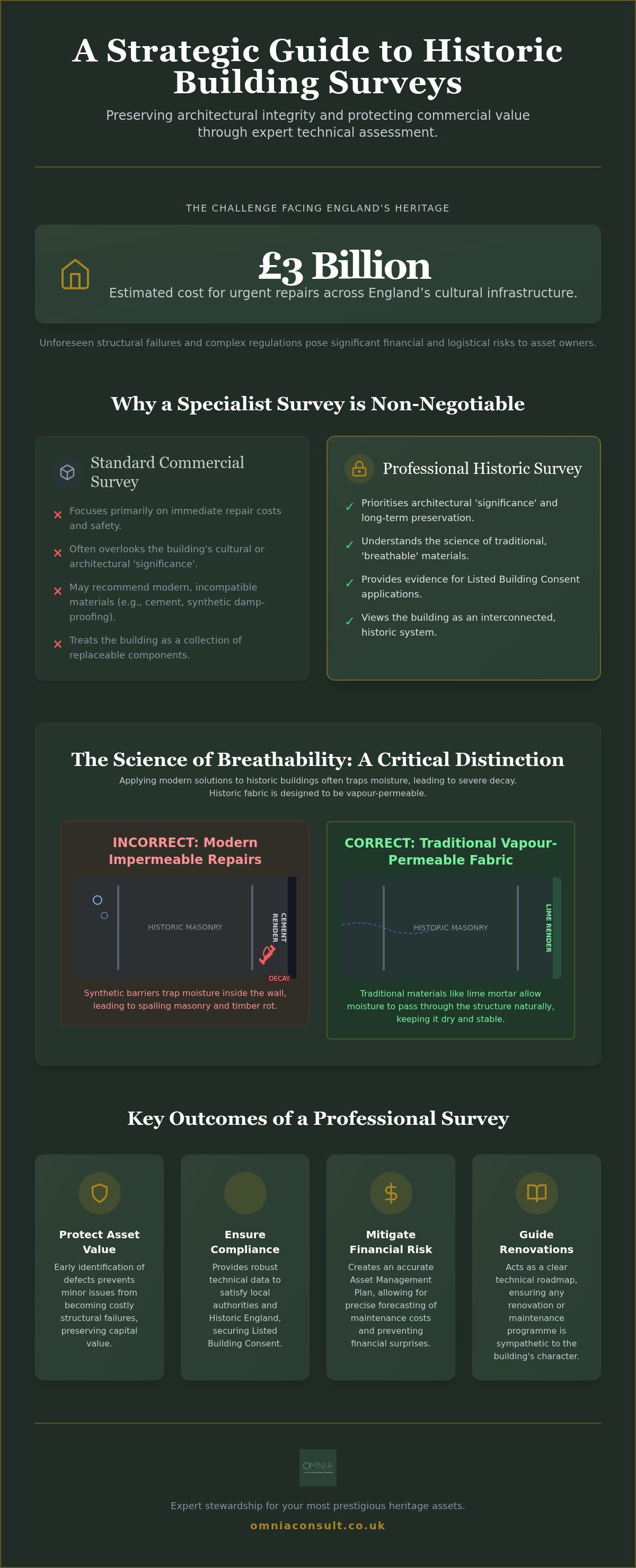
With an estimated £3 billion currently required for urgent repairs across England’s cultural infrastructure, the financial stakes of managing a heritage asset have never been higher. You likely recognise that stewardship of a listed property is a significant responsibility that often brings a unique set of anxieties. The fear of discovering unforeseen structural failures or the stress of navigating the complexities of the Planning (Listed Buildings and Conservation Areas) Act 1990 can make any project feel overwhelming. It’s a delicate balance between preserving the past and ensuring a viable future for the building.
Professional historic building surveys act as your technical compass in this regulated landscape. By identifying the true condition of the fabric early on, you can mitigate financial risks and avoid the high costs associated with inappropriate conservation techniques. This guide provides a clear roadmap for your renovation or maintenance programme, ensuring total compliance with Historic England and local authority standards. We will explore how a holistic approach to survey data protects both the architectural integrity and the commercial value of your most prestigious assets, giving you the confidence to move forward with precision.
Table of Contents
What is a Historic Building Survey and Why is it Essential?
A historic building survey is far more than a standard condition report; it is a specialised technical assessment designed to understand the unique lifecycle of a heritage asset. Whilst a typical commercial survey focuses primarily on immediate repair costs and safety, a heritage-specific assessment prioritises the "significance" of the structure as defined by Historic England. This means evaluating not just the physical fabric, but also the cultural, social, and architectural value that the building contributes to its environment. Understanding this context is the first step in any successful management strategy.
Traditional buildings constructed with lime mortar, timber frames, or solid stone require a fundamentally different surveying philosophy. Modern buildings are often designed to be impermeable, relying on synthetic barriers to keep moisture out. In contrast, historic fabric is designed to be vapour-permeable, allowing moisture to move through the structure. Applying standard damp-proofing or cement-based repairs can trap moisture within the walls, leading to masonry spalling and accelerated timber rot. Therefore, historic building surveys must be conducted by professionals who understand the science of breathable materials and the delicate balance required to maintain structural integrity without compromising original features.
Historic vs. Historical: The Surveyor’s Perspective
In the professional built environment, the distinction between "historic" and "historical" is critical for regulatory compliance. A building is historical simply because it is old, but it becomes historic when it possesses a level of significance that warrants protection. This level of significance dictates the depth of the survey required and informs the constraints of any proposed works. A historic building survey is a forensic examination of both physical condition and architectural importance. Precision is paramount here.
The rigour of these assessments often draws on established frameworks similar to those seen in international Heritage Documentation Programs, ensuring that every detail is recorded with precision. This level of documentation is not merely academic; it is the essential evidence required to satisfy local planning authorities and Historic England when seeking consent for alterations or repairs. Precise documentation provides the data needed to guide a project through the planning system without costly delays. Consent depends on evidence.
Protecting Commercial Value Through Heritage Expertise
From a commercial perspective, early intervention is the most effective way to preserve capital value. Identifying a minor defect in a timber frame or a failing lead gutter through historic building surveys prevents these issues from escalating into structural failures that could cost tens of thousands of pounds to rectify. These surveys provide a robust foundation for Asset Management Planning, allowing owners to forecast maintenance costs with accuracy. Strategic planning prevents surprises.
By ensuring that architectural design remains sympathetic to the original character, professional surveyors help maintain the building’s prestige and marketability. This holistic approach ensures that the property remains a functional, valuable asset whilst meeting all modern regulatory requirements. Protecting the fabric is, ultimately, about protecting the investment.
The Technical Fabric: Structural and Damp Assessments
Technical precision is the bedrock of heritage management. Unlike modern construction, where components are often modular and replaceable, the fabric of a listed building is an interconnected system of traditional materials. Professional historic building surveys utilise non-destructive testing to map the internal health of a structure without disturbing its original materials. This forensic approach allows us to assess the building envelope and its thermal performance whilst ensuring that any proposed energy-efficiency measures don't introduce condensation risks that could compromise the integrity of the timber or stone.
Structural Integrity in Heritage Assets
Grade 1 and Grade 2 listed buildings often suffer from masonry fatigue or timber decay that remains hidden behind centuries of aesthetic finishes. We look for forensic markers, such as specific cracking patterns that indicate historic movement versus active subsidence. It's common to find that previous alterations, perhaps from the Georgian or Victorian eras, are placing undue stress on an older medieval frame. By identifying these issues, historic building surveys provide the data needed to create highly specific technical specifications for remedial work, ensuring that repairs are both effective and compliant with conservation standards.
Managing Damp and Moisture in Older Buildings
The most common threat to heritage assets is the application of modern, impermeable materials. Traditional buildings rely on the science of breathability; they absorb and release moisture naturally through porous materials like lime and timber. When cement-based renders or chemical damp-proof courses are introduced, they trap moisture within the walls, leading to internal decay and masonry spalling. This is why a sympathetic approach is vital for the long-term health of the property.
Following the guidance in BS 7913:2013, our assessments move away from the automatic assumption of rising damp. Instead, we identify the root cause of moisture, which is often as simple as a leaking gutter, blocked air bricks, or poor ground drainage. For those managing a complex portfolio, a professional Building Condition Survey offers the forensic insight required to propose sympathetic solutions that maintain the building's natural moisture balance. Identifying the source of damp correctly prevents the high costs associated with incorrect conservation methods and ensures the building remains a viable commercial asset.
Comparing Survey Types: Condition, Structural, and Impact
Selecting the appropriate technical assessment is a critical decision for any heritage property owner. Whilst the terminology can occasionally overlap, the scope and purpose of each report differ significantly. Choosing the wrong type of assessment can lead to gaps in your maintenance strategy or, worse, the rejection of a planning application. Recognising that historic building surveys are not a one-size-fits-all solution is the first step toward effective stewardship.
Building Condition Surveys: These serve as the baseline health check for your asset. They provide a comprehensive overview of the property's state of repair, identifying both immediate defects and long-term maintenance requirements.
Structural Surveys: This is a deep-dive into the load-bearing health of the property. It focuses on the stability of the skeleton, assessing everything from foundation movement to the integrity of ancient timber joints.
Fabric Surveys: These involve the detailed mapping of original materials. By documenting specific stone types, mortar mixes, and timber species, we create a precise record that guides authentic conservation work.
Heritage Impact Assessments (HIA): Unlike condition-based reports, an HIA evaluates how proposed changes will affect the building's significance. It's a requirement for most applications involving listed assets.
When to Commission a Heritage Impact Assessment
For developers and commercial owners, the HIA is a vital tool in the planning process. It acts as the bridge between your vision for modernisation and the local authority's duty to preserve. By clearly articulating the "public benefit" of a project, the assessment can justify sensitive alterations that might otherwise be refused. This document should be integrated early into your listed building renovation strategy. It ensures that every design choice is backed by a robust heritage rationale, reducing the risk of costly planning delays.
Integrated Asset Management Planning
For those managing commercial portfolios, data from historic building surveys must be translated into actionable financial plans. Integrated asset management involves combining condition data with long-term lifecycle planning to ensure the building remains commercially viable. We help you prioritise urgent repairs that protect the structure whilst scheduling desirable heritage enhancements for future phases. This methodical approach ensures that your maintenance budget is spent where it will have the greatest impact on both the building’s health and its market value. Strategic oversight ensures that conservation and commercial objectives work in tandem.
Navigating Regulatory Compliance and Consent
Compliance within the heritage sector is governed by the Planning (Listed Buildings and Conservation Areas) Act 1990. For the owners of the 401,419 entries on the National Heritage List for England, understanding these statutory requirements is non-negotiable. Unauthorised alterations to a listed building are a criminal offence, potentially leading to unlimited fines or imprisonment. Professional historic building surveys provide the forensic evidence needed to justify changes, transforming a potentially adversarial planning process into a structured, evidence-based dialogue with local authorities.
A successful application relies on the quality of the technical data presented. Conservation Officers often face significant workloads and appreciate clear, professional documentation that respects the building's significance. By using high-quality survey data, you demonstrate a commitment to stewardship that builds trust. This collaborative approach often leads to smoother approvals and prevents the costly delays associated with appeals or enforcement notices.
Securing Listed Building Consent
It's a methodical process that begins long before an application is submitted. We recommend a three-step approach to ensure your project remains compliant whilst meeting your commercial objectives:
Step 1: Conduct thorough historic building surveys to establish a baseline of significance. This identifies exactly which features must be protected.
Step 2: Develop technical specifications that utilise sympathetic materials and methods, ensuring any intervention is reversible where possible.
Step 3: Engage specialist listed building consent consultants to manage the submission and liaise with the local planning authority.
Regulatory Compliance and CDM 2015
Heritage projects present unique health and safety challenges that standard construction protocols don't always fully address. Older structures frequently contain hazardous materials such as lead-based paints or asbestos, and their fragile fabric can pose risks during both the survey and renovation phases. Compliance with the Construction (Design and Management) Regulations 2015 is essential to protect all parties involved. Our role as CDM Principal Designer ensures that these risks are identified and managed from the earliest design stages.
Strategic safety management integrates the findings of your technical assessments into a comprehensive risk register. This proactive stance ensures that all survey activities and subsequent works comply with current UK safety regulations whilst respecting the building’s integrity. If you require expert guidance through the complexities of heritage regulations, our team is ready to act as your professional regulatory partner.
Strategic Stewardship: How OMNIA Manages Heritage Assets
OMNIA Building Consultants Ltd operates as a "Trusted Navigator" in an industry where the margin for error is remarkably slim. We recognise that a survey is not an isolated document; it is the foundation of a much larger lifecycle of stewardship. Our holistic approach ensures that the insights gained from initial historic building surveys are seamlessly integrated into every subsequent stage, from the creation of technical specifications to final contract administration. This continuity of care is what preserves both the physical integrity and the commercial value of the UK’s most significant heritage assets.
Technical precision is our hallmark. When we prepare bid writing documentation or develop space planning layouts, we do so with a deep understanding of the building’s specific constraints and opportunities. We don't just identify defects; we provide the strategic roadmap required to resolve them whilst maintaining total regulatory compliance. This proactive management style ensures that the long-term viability of the asset is never left to chance.
End-to-End Project Management
Managing a heritage development requires a delicate balance between architectural ambition and the rigorous requirements of conservation. We bridge the gap between architectural design and technical surveying, ensuring that your vision is achievable within the framework of listed building consent. By acting as a steady hand throughout the entire project lifecycle, we help developers avoid the common pitfalls that lead to budget overruns or planning refusals. Our experience allows us to anticipate challenges before they manifest as costly delays.
Our team manages complex planning applications with a focus on delivering robust, evidence-based submissions. Whether we are acting as the CDM Principal Designer or providing building planning advice, our objective remains the same: to ensure the project progresses smoothly from concept to completion. We provide the professional oversight necessary to maintain the building’s significance whilst adapting it for modern commercial use.
Expert Consultancy for Professional Clients
Commercial landlords and professional property managers trust OMNIA because we understand the long-term implications of asset management planning. We provide more than just technical data; we offer "quiet expertise" that instils confidence in your investment strategy. Our approach focuses on the long-term viability of the building, ensuring that maintenance programmes are proactive rather than reactive. This methodical planning is essential for protecting the capital value of older property portfolios.
This strategic stewardship is vital for maintaining the integrity of the UK's built environment. We are committed to ensuring that historic buildings remain functional, safe, and commercially productive for decades to come. If you are responsible for a heritage asset and require a partner who combines technical rigour with a supportive, professional approach, contact OMNIA today to arrange your historic building surveys. We are ready to guide you through every complexity of your project with precision and care.
Securing the Future of Your Heritage Assets
Managing a listed property requires more than an appreciation for its history; it demands a forensic understanding of its physical health and regulatory standing. Technical assessments move beyond surface-level observations to identify the root causes of decay, such as moisture entrapment or structural fatigue. By aligning these findings with statutory requirements, you protect your investment from unforeseen costs and planning delays. Professional historic building surveys provide the definitive data needed to navigate the complexities of heritage conservation with confidence.
OMNIA offers national coverage for commercial and professional assets, providing specialist heritage planning and consent expertise alongside comprehensive project management and contract administration. To ensure your property is managed with technical rigour and care, you can instruct OMNIA for your professional historic building survey. Stewardship is a journey, and with the right technical partner, your heritage asset can continue to thrive as a functional and valuable piece of the UK's architectural landscape.
Frequently Asked Questions
What is the difference between a standard building survey and a historic building survey?
A standard building survey focuses on modern defects and safety, whereas a historic building survey evaluates the significance and technical requirements of traditional, breathable fabric. Standard reports often recommend modern solutions that can inadvertently damage older structures. Our assessments prioritise the use of lime mortars and sympathetic repairs to ensure long-term integrity. It's about understanding how the building was designed to function rather than forcing modern standards upon it.
Do I need a historic building survey for a Grade 2 listed property?
Yes, a technical assessment is essential for a Grade 2 listed property if you are planning any material changes or long-term maintenance. Listing covers the entire structure, including the interior and curtilage, and any unauthorised works can result in criminal prosecution. A professional survey provides the technical baseline required to ensure all works are compliant with the Planning (Listed Buildings and Conservation Areas) Act 1990.
How much does a historic building survey cost for a commercial asset?
The investment for a survey on a commercial heritage asset varies based on the building’s size, complexity, and the level of detail required. Whilst basic residential surveys have lower entry points, commercial heritage assets require a higher level of forensic detail and specialist expertise. Costs are influenced by the need for non-destructive testing and the depth of the heritage significance assessment. Professional fees reflect the specialist nature of the work and the risk mitigation provided.
Will a historic building survey help me get planning permission?
Yes, a professional survey is a vital component of a successful planning application for any listed building. It acts as the evidence base for your Heritage Impact Assessment, proving to Conservation Officers that your proposals are based on a sound understanding of the building's fabric. By identifying what is significant early on, you can design alterations that are more likely to be approved without costly revisions or delays.
Can a historic building survey identify damp issues in thick stone walls?
Forensic historic building surveys are specifically designed to identify the root causes of moisture in thick, traditional masonry. Unlike standard damp meters that often give false readings in salt-contaminated stone, we look at the building’s environmental performance and permeability. This approach allows us to differentiate between condensation, penetrating damp, and simple maintenance failures like leaking gutters, preventing the need for invasive and often damaging chemical treatments.
What happens if a survey reveals unauthorised historic alterations?
If a survey reveals unauthorised historic alterations, it allows you to address the issue proactively before it becomes a legal or financial liability. You may need to apply for retrospective listed building consent or carry out remedial works to restore the building’s significance. Identifying these issues early provides the opportunity to regularise the property's status, which is critical for maintaining its commercial value and ensuring a smooth future sale or transfer.
How long does a professional historic building survey take to complete?
The timeframe for a professional survey typically ranges from two to four weeks from the initial site visit to the delivery of the final report. The on-site inspection may take several days for larger commercial assets, followed by a period of technical analysis and research. We ensure that every report is thorough and provides the forensic detail necessary for long-term asset management and planning compliance.
Is a structural survey different from a heritage impact assessment?
A structural survey assesses the physical stability and load-bearing health of the building, whereas a Heritage Impact Assessment (HIA) evaluates the effect of proposed changes on the building's significance. Whilst a structural report tells you if the building is stable, an HIA tells the planning authority how your renovation will respect the property's history. Both are often required for complex heritage projects to ensure safety and total regulatory compliance.